What to know about R-123 chillers
A machine identified with R-123 may have old operating records, a later conversion or an uncertain charge. Keeping these details together helps a buyer understand the chiller without relying on a generic refrigerant assumption.
We consider chillers using all refrigerants, including equipment labeled R-123. A refrigerant label is only one part of the offer: the complete machine, its condition, included components and the pickup route also matter. Do not infer the current charge from a model name.
Plan the pickup at your Ohio site
Ohio pickup planning starts at the exact equipment location, not just the mailing address. Show the machine in its room or on its pad, the intended exit, the route to a truck and any locked gates. Tell us who can approve access and whether nearby equipment needs to stay in service. A roof, basement and outdoor yard each present different handling questions.
Tell us about known site restrictions before scheduling. A site contact can explain what is accessible, but the removal team must evaluate the actual route, load and work area.
Define the asset at its boundaries
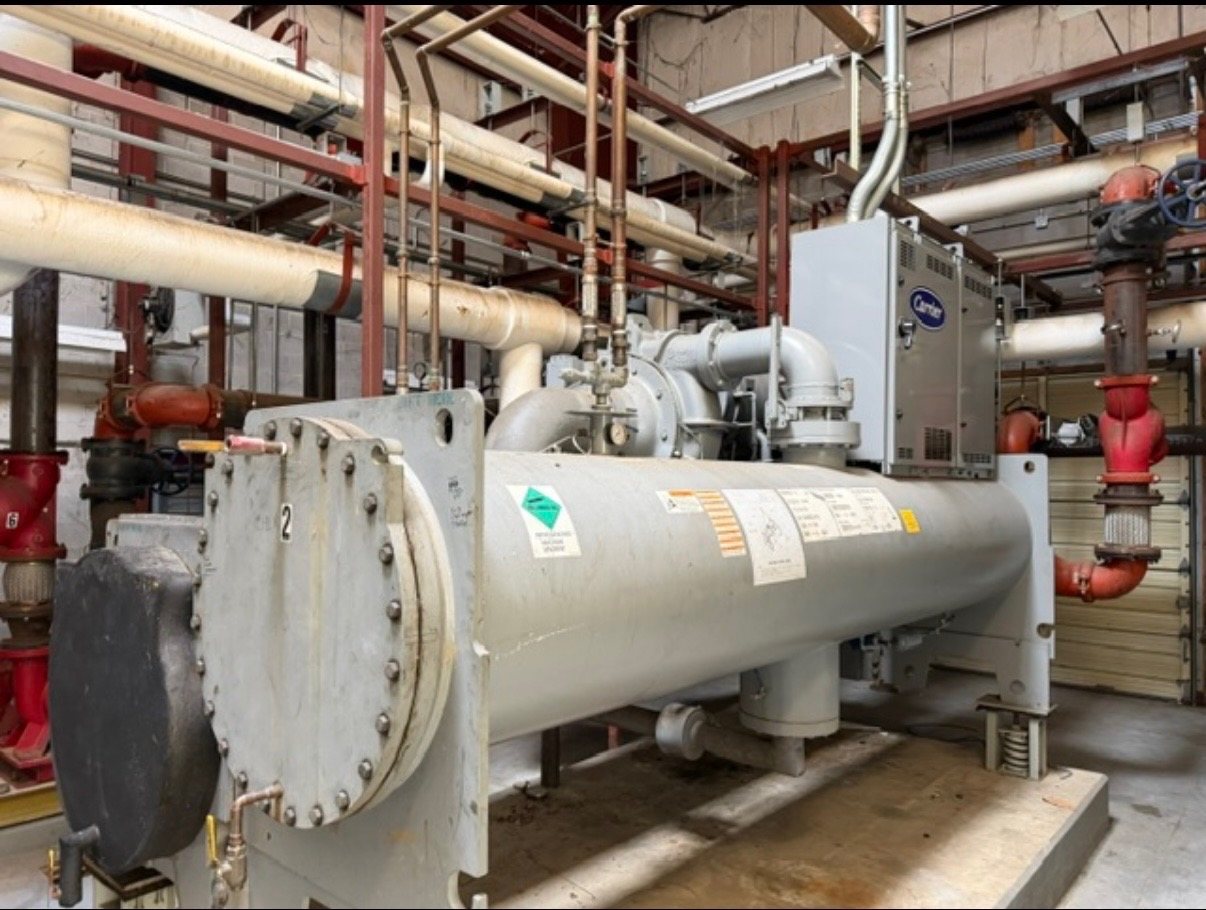
Photograph the nameplate and any current refrigerant or conversion tag; report the stated charge quantity if legible, but do not guess.
A chiller purchase is clearer when the owner identifies the machine, any matching starter or drive, and the controls that go with it. Photograph the complete assembly as well as its manufacturer, model, serial, capacity, voltage and refrigerant label. Note which pumps, tower, pipes and building controls must stay. A brand name on nearby equipment is not a substitute for a unit-level identification.
Condition is information, not a testing requirement
Disclose any known leak, prior recovery or conversion. The actual charge can be unknown; do not restart the chiller or open a fitting to find out.
If components were removed for another project, identify which ones are missing and photograph the remaining assembly. A machine with an incomplete control cabinet is different from a complete machine with an inoperable display, and both can be discussed without a test.
We consider used, surplus and non-running chillers, including equipment of unknown operating condition. There is no need to restore power, repair a fault or perform a performance test to ask for a cash offer. Accurate disclosure and a possible site access review are different from requiring the machine to operate.
Confirm electrical and controls boundaries
A chiller can have power and control connections in different places, including a separate starter or drive. Tell the buyer where those cabinets are and which building controls remain. The buyer covers the agreed disconnects and refrigerant recovery, using appropriately qualified personnel. Do not remove covers, disconnect wiring, reset controls or assume that a blank display means the system is electrically safe.
Evaluate an outdoor lift and staging area
Allow qualified personnel to assess the circuit and required recovery. Do not loosen fittings or vent refrigerant to make the equipment easier to move.
A pad or rooftop location is not enough information to select a crane. Show the unit and its surroundings, possible staging area, overhead obstructions and access for a truck. The buyer coordinates and covers agreed crane work when needed, rigging, loading, freight and hauling. Actual reach, ground support, clearance and equipment weight must be evaluated by the crew rather than estimated from cooling tons.
Resolve uncertainty before pickup
An initial inquiry can start with imperfect information, but material uncertainty about ownership, equipment scope or access should be addressed in the agreed plan. Share conflicting records or missing details openly. We make a cash offer and pay upfront before pickup once an offer is accepted. Confirm the payment method, equipment and buyer-paid disconnect, recovery, rigging and transport scope in writing.
If a drive, starter or controller sits in another room, describe it separately and establish whether it is included. An offer is clearer when both the machine and its associated accessories are specifically listed.
What to send for a useful first conversation
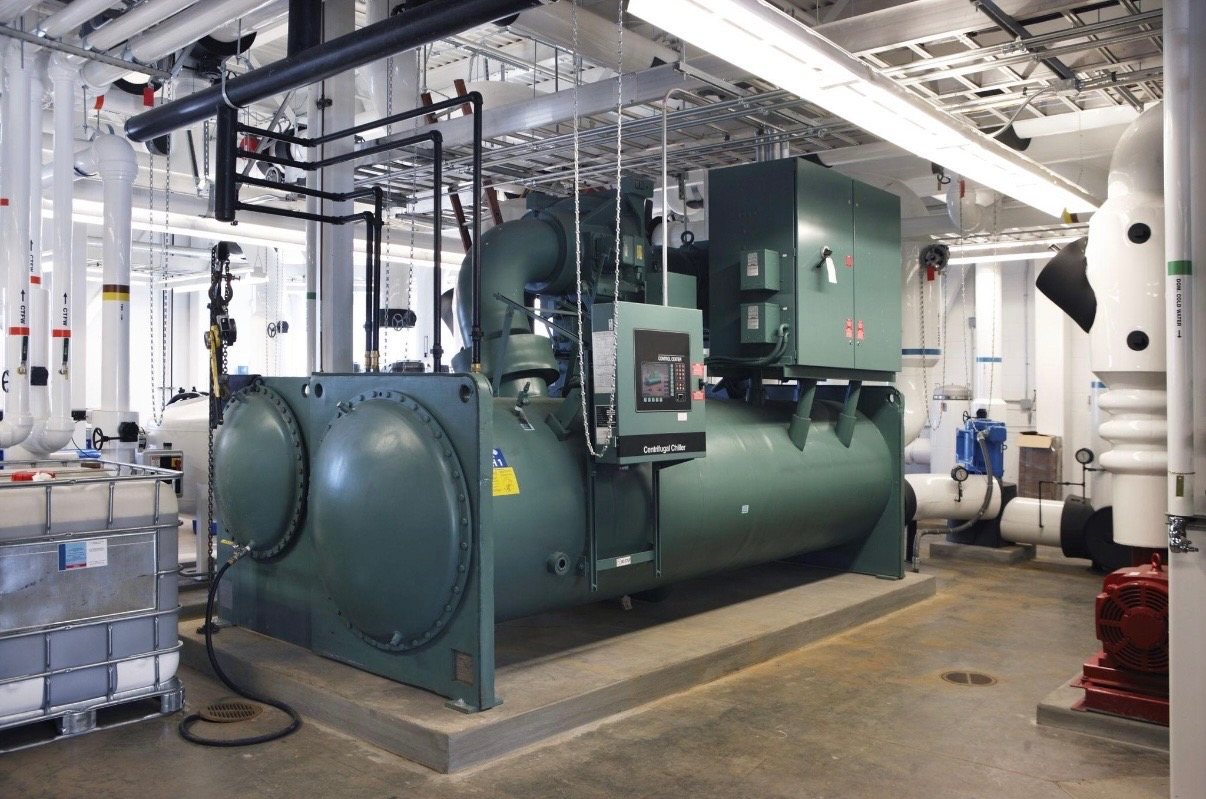
Send a wide picture of the entire chiller and a readable nameplate photo. Add the pickup address or city, the unit’s location in the building, and the name of the authorized equipment owner. Say whether controls or a separate starter are included and describe any known faults. A picture of the service exit helps the buyer understand how it may be removed.
For a chiller marked R-123 in Ohio, include the location and a contact who can confirm the asset and arrange site access. If a detail is unavailable, say so instead of taking an unsafe photograph or guessing at the specifications.
What if another system must stay running?
Identify the live system and ask the facility representative to mark the boundary with the chiller being sold. The buyer plans the agreed disconnect and removal with qualified personnel. A site-specific review is different from testing the chiller for purchase.