What to know about R-12 chillers
An R-12 marking can appear on older equipment or records. The relevant question for a buyer is what is in the chiller now, not simply what may have been specified when it was manufactured.
We consider chillers using all refrigerants, including equipment labeled R-12. A refrigerant label is only one part of the offer: the complete machine, its condition, included components and the pickup route also matter. Do not infer the current charge from a model name.
Plan the pickup at your Ohio site
Ohio pickup planning starts at the exact equipment location, not just the mailing address. Show the machine in its room or on its pad, the intended exit, the route to a truck and any locked gates. Tell us who can approve access and whether nearby equipment needs to stay in service. A roof, basement and outdoor yard each present different handling questions.
Tell us about known site restrictions before scheduling. A site contact can explain what is accessible, but the removal team must evaluate the actual route, load and work area.
Separate cooling capacity from lifting weight
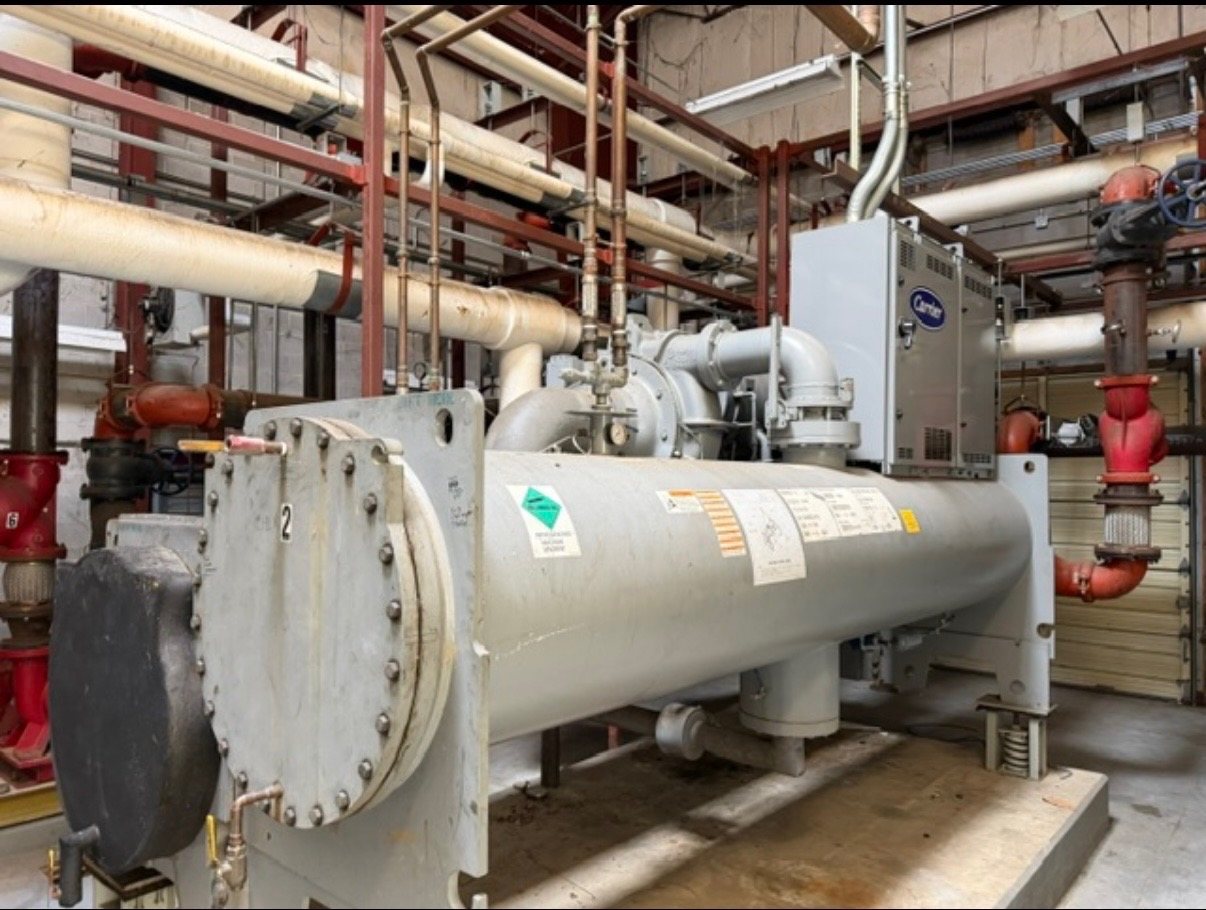
Provide the machine model, serial and a photo of every accessible refrigerant or conversion label.
Cooling tons describe refrigeration capacity, not the number of tons a machine weighs. The total capacity of a complete chiller also may differ from the rating of one compressor or module. Provide the model and serial, rated unit capacity, voltage and refrigerant from the chiller label. If a manufacturer drawing provides operating or shipping weight, share the document and identify which weight it states.
Condition is information, not a testing requirement
Disclose any known leak, prior recovery or conversion. The actual charge can be unknown; do not restart the chiller or open a fitting to find out.
A long idle period can leave the maintenance history incomplete. Give the last known status and distinguish what you observed from what an old record says. An unreadable label or an unknown fault is better described honestly than filled in with a guess.
We consider used, surplus and non-running chillers, including equipment of unknown operating condition. There is no need to restore power, repair a fault or perform a performance test to ask for a cash offer. Accurate disclosure and a possible site access review are different from requiring the machine to operate.
Plan for water or process-fluid connections
The chiller may have water or process-fluid piping in addition to its refrigerant circuit. Tell the buyer which connections are still attached, whether fluid condition is known and what nearby equipment has to stay. The buyer coordinates and pays for agreed disconnects and refrigerant recovery. The site should identify the system boundaries; personnel doing the work determine the appropriate isolation and handling steps.
Check loading space and truck access
Do not open a valve to check the charge. Share previous recovery documentation if it exists and let the removal team plan the work.
A suitable loading area requires more than a nearby door. Describe the gate, turning room, dock height, possible truck position and any other contractors using the area. The buyer handles and covers the agreed rigging, crane work if needed, loading, freight and hauling. Weight, load distribution and the route to the vehicle must be verified for the particular machine and property.
Resolve uncertainty before pickup
An initial inquiry can start with imperfect information, but material uncertainty about ownership, equipment scope or access should be addressed in the agreed plan. Share conflicting records or missing details openly. We make a cash offer and pay upfront before pickup once an offer is accepted. Confirm the payment method, equipment and buyer-paid disconnect, recovery, rigging and transport scope in writing.
For multiple units, label each nameplate photo to match its location. Decide whether the sale includes all machines as a group or only the ones listed in the offer; nearby pumps and electrical gear are not automatically included.
What to send for a useful first conversation
Start with an asset list: manufacturer, model, serial, rated capacity, refrigerant and the location of each machine. Identify which units are surplus and whether they are still connected. Add photographs showing the room, pad or roof and the route toward a loading area. If the records are incomplete, mark unknown items rather than guessing or starting the machine.
For a chiller marked R-12 in Ohio, include the location and a contact who can confirm the asset and arrange site access. If a detail is unavailable, say so instead of taking an unsafe photograph or guessing at the specifications.
What if another system must stay running?
Identify the live system and ask the facility representative to mark the boundary with the chiller being sold. The buyer plans the agreed disconnect and removal with qualified personnel. A site-specific review is different from testing the chiller for purchase.