What to know about screw chillers
A screw chiller uses a rotary screw compressor. It may be a packaged outdoor unit or an indoor machine in a larger water system, and a single chiller can have more than one compressor or refrigerant circuit. The actual configuration matters more than the compressor name alone.
For this Cleveland purchase, describe the actual screw chillers offered and distinguish the unit from any shared equipment that remains on site. The offer can include a plan for the buyer to remove it, rather than asking the owner to deliver it or run a test.
Plan the pickup at your Cleveland site
Cleveland is in Cuyahoga County. For a Cleveland mechanical room, describe whether the route leaves through a basement, a service corridor, a roof opening, or a ground-level door. A water-cooled unit can have separate condenser-water piping, so a simple exterior photo is not enough to establish the lift plan. Explain any building access or neighboring-tenant restrictions.
Tell us about known site restrictions before scheduling. A site contact can explain what is accessible, but the removal team must evaluate the actual route, load and work area.
Define the asset at its boundaries
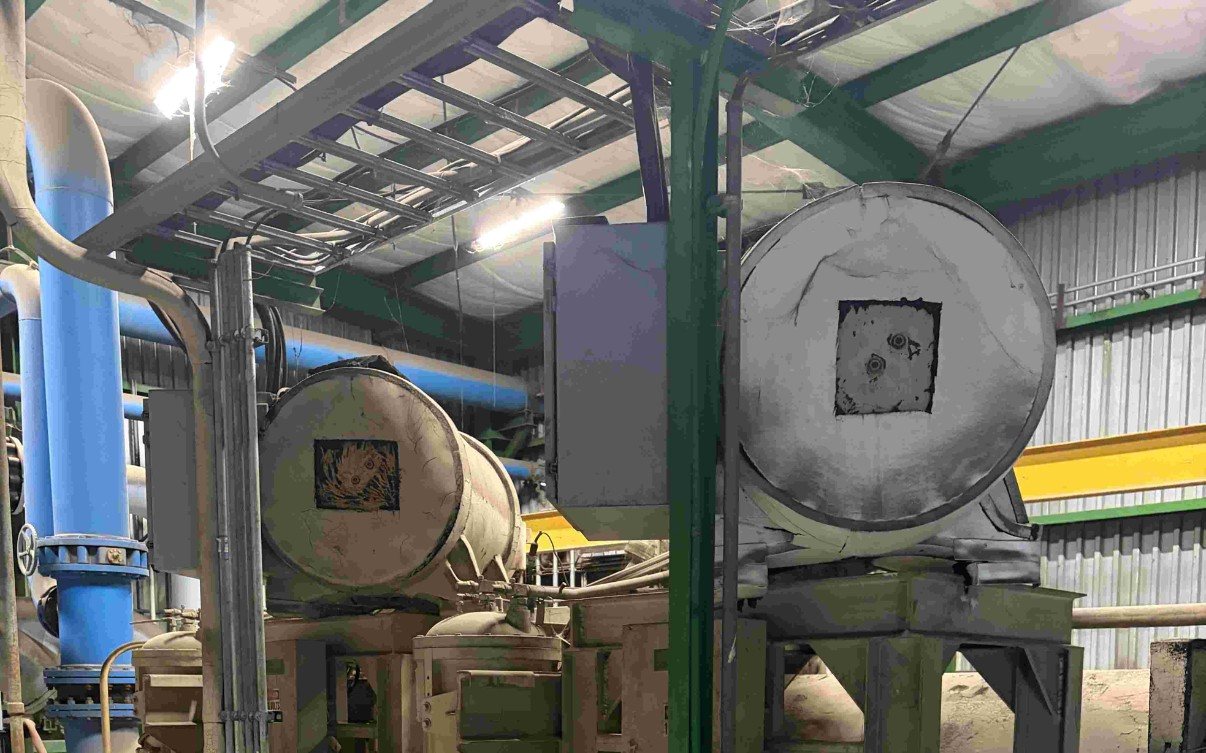
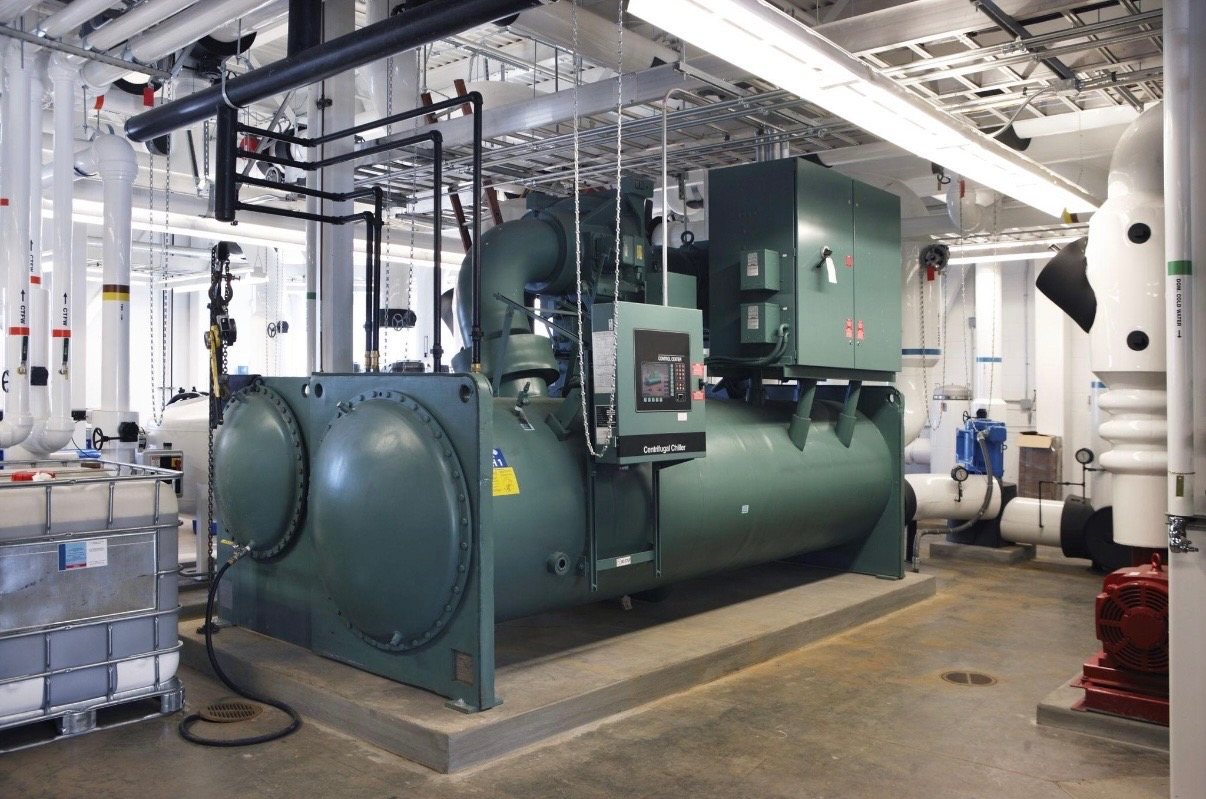
Photograph the complete machine, chiller and compressor labels, and the control panel. Specify whether the tonnage is for the whole unit or a single circuit.
A chiller purchase is clearer when the owner identifies the machine, any matching starter or drive, and the controls that go with it. Photograph the complete assembly as well as its manufacturer, model, serial, capacity, voltage and refrigerant label. Note which pumps, tower, pipes and building controls must stay. A brand name on nearby equipment is not a substitute for a unit-level identification.
Condition is information, not a testing requirement
A known fault on one circuit, missing electrical parts or a prior repair should be described as accurately as possible; do not energize equipment for the quote.
A machine described as spare may be disconnected, or it may still be connected and held for backup. Clarify its current release status and when the site can make it available; do not start it just to establish its value.
We consider used, surplus and non-running chillers, including equipment of unknown operating condition. There is no need to restore power, repair a fault or perform a performance test to ask for a cash offer. Accurate disclosure and a possible site access review are different from requiring the machine to operate.
Confirm electrical and controls boundaries
A chiller can have power and control connections in different places, including a separate starter or drive. Tell the buyer where those cabinets are and which building controls remain. The buyer covers the agreed disconnects and refrigerant recovery, using appropriately qualified personnel. Do not remove covers, disconnect wiring, reset controls or assume that a blank display means the system is electrically safe.
Plan for basement or interior equipment
Show the skid, connections and access around the compressor and vessels so the buyer can plan the disconnect and movement as a complete package or approved sections.
An interior machine may have to pass through a service corridor, opening, ramp or other constrained route. Photograph each transition and describe any surfaces or adjacent machinery that need protection. The buyer coordinates and pays for agreed rigging, crane work if needed, loading and freight. Qualified personnel determine whether a route is viable and whether any separation is appropriate for that specific machine.
Coordinate a sale with a larger project
A replacement or shutdown may have several contractors working against different milestones. Tell us when the equipment can be released, who approves access and whether shared systems need to stay operational. We make a cash offer and pay upfront before pickup when accepted. Put the asset list and agreed buyer-paid removal work in writing so the chiller purchase is not confused with the entire plant project.
Where records conflict, share both the installed equipment label and the inventory sheet. The buyer can resolve questions during review rather than assuming that a single old schedule describes the present machine.
What to send for a useful first conversation
If the equipment is outdoors or on a roof, show the whole machine, nameplate, perimeter clearance and an available truck or crane staging area. Provide the exact location and say whether fences, overhead obstacles or building restrictions affect access. Explain the known condition, included accessories and whether the unit remains connected.
For screw chillers in Cleveland, include the location and a contact who can confirm the asset and arrange site access. If a detail is unavailable, say so instead of taking an unsafe photograph or guessing at the specifications.
What if another system must stay running?
Identify the live system and ask the facility representative to mark the boundary with the chiller being sold. The buyer plans the agreed disconnect and removal with qualified personnel. A site-specific review is different from testing the chiller for purchase.