What to know about Smardt chillers
Some Smardt chillers use oil-free magnetic-bearing compressor technology, but the name alone is not proof of a particular configuration. Explain the installed compressor type where known and provide the machine label so the actual equipment can be evaluated.
The owner does not need to start or performance-test the chiller to request a purchase. Describe known defects, missing parts and how long it has been idle. Site and identification information are still needed so that equipment and removal can be evaluated accurately.
Plan the pickup at your Ohio site
Ohio pickup planning starts at the exact equipment location, not just the mailing address. Show the machine in its room or on its pad, the intended exit, the route to a truck and any locked gates. Tell us who can approve access and whether nearby equipment needs to stay in service. A roof, basement and outdoor yard each present different handling questions.
Tell us about known site restrictions before scheduling. A site contact can explain what is accessible, but the removal team must evaluate the actual route, load and work area.
Work with an incomplete equipment record
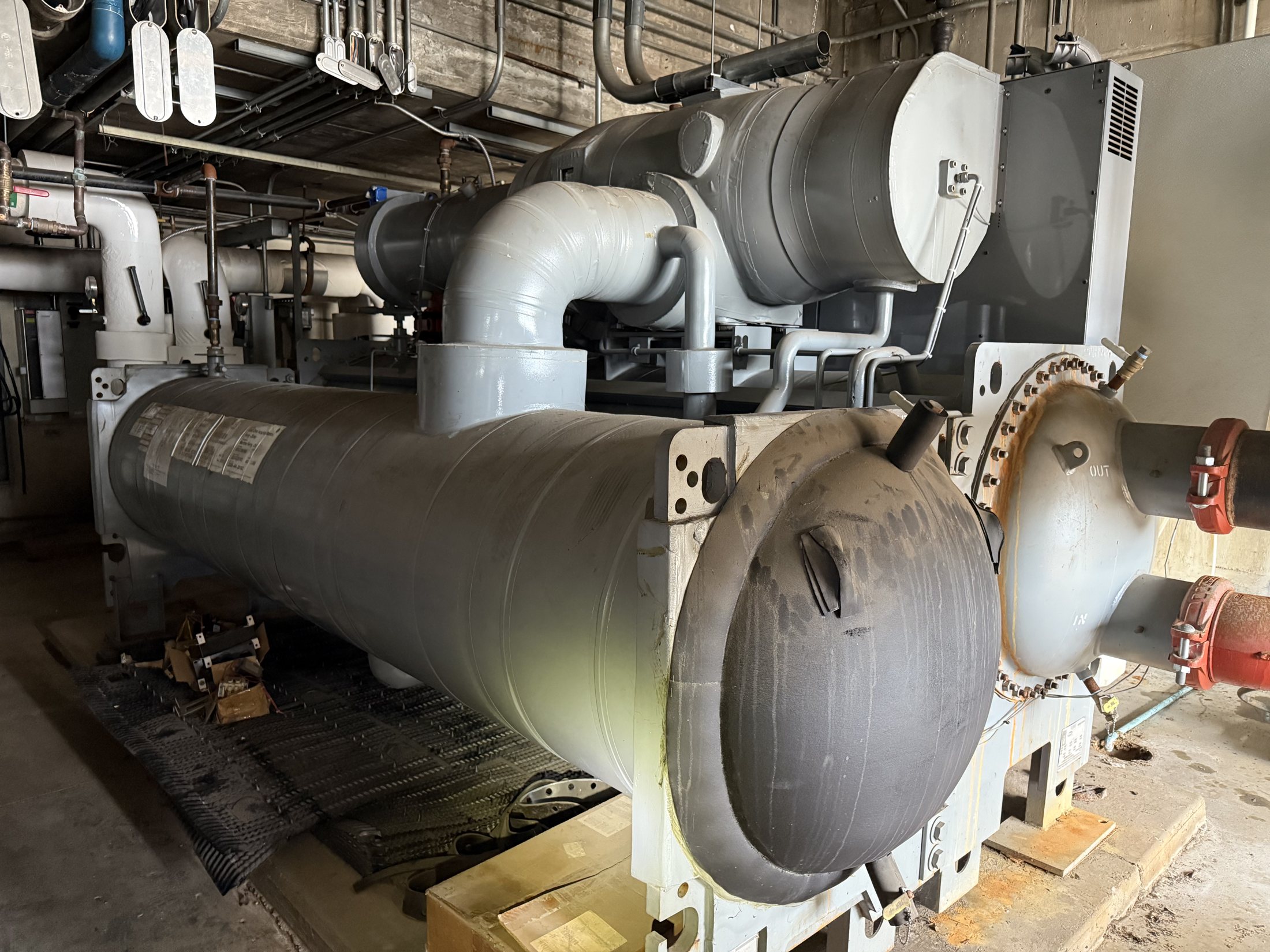
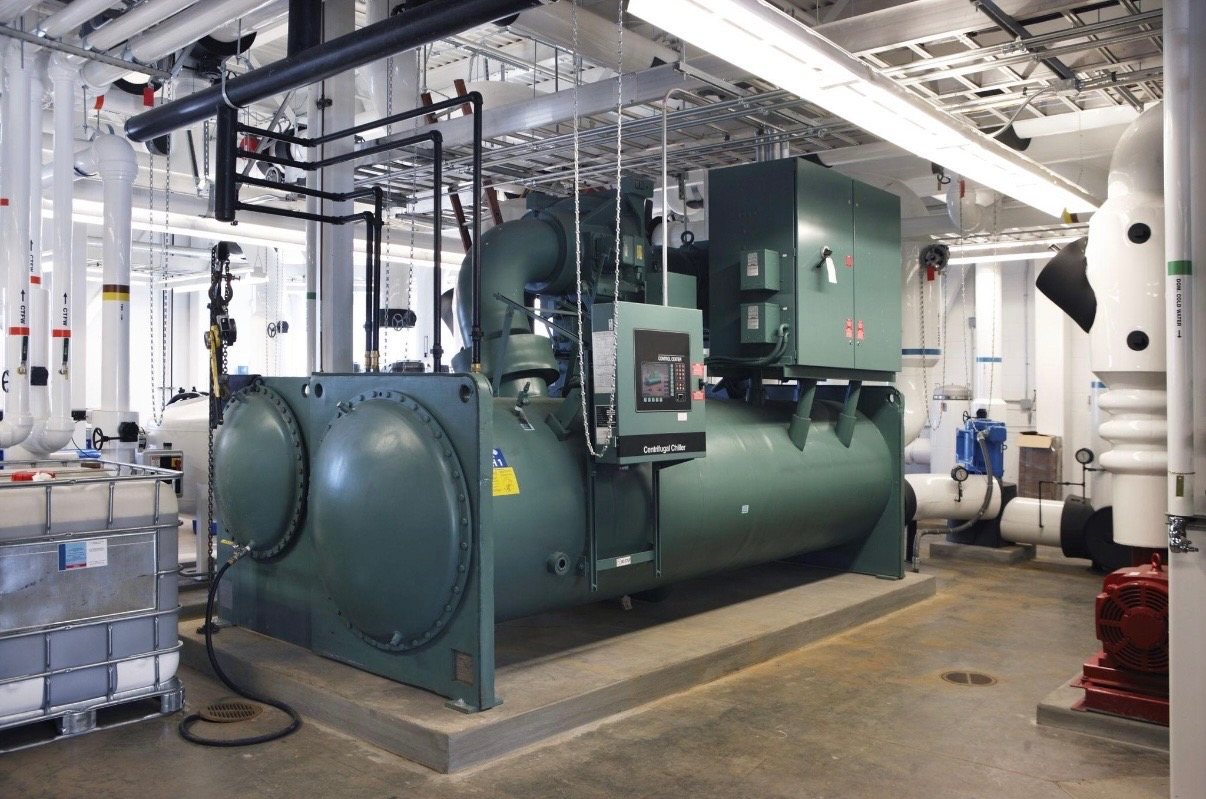
Photograph the complete unit, its model and serial label, individual compressor labels if safely visible, and the controller or separate power cabinet.
If the tag is difficult to read or the machine is no longer powered, a wide photo and an existing asset list can still start the conversation. Do not climb, remove electrical covers or enter an unsafe area to obtain a picture. Send whatever model, serial, capacity, voltage and refrigerant information is safely available, and clearly mark unknown fields so they are not mistaken for confirmed facts.
Condition is information, not a testing requirement
Mention disconnected controls, a compressor issue or service history only if known. An unknown fault does not require a test or an attempt to reset the machine.
Visible corrosion, coil damage, water staining or missing insulation should be shown in photographs rather than concealed. The buyer can consider the equipment as-is while also planning how its condition affects safe handling.
We consider used, surplus and non-running chillers, including equipment of unknown operating condition. There is no need to restore power, repair a fault or perform a performance test to ask for a cash offer. Accurate disclosure and a possible site access review are different from requiring the machine to operate.
Confirm electrical and controls boundaries
A chiller can have power and control connections in different places, including a separate starter or drive. Tell the buyer where those cabinets are and which building controls remain. The buyer covers the agreed disconnects and refrigerant recovery, using appropriately qualified personnel. Do not remove covers, disconnect wiring, reset controls or assume that a blank display means the system is electrically safe.
Use drawings without treating them as a lift plan
Identify the heat exchangers, compressor mounting and power connections in photographs; the removal crew will determine safe lifting points and handling.
Existing dimensions, rigging drawings or documented weights can help frame the job, especially for a large central-plant unit. Tell us whether they describe the installed configuration or an earlier one. The buyer covers agreed rigging, crane if needed, loading, freight and hauling. The crew still verifies current obstacles, floor capacity, actual weight and lifting points before moving the equipment.
Document an as-is purchase
A clear as-is discussion distinguishes known faults from missing information. Provide photographs and describe removed components or an uncertain history; a running test is not required. We consider those facts alongside the removal requirements when making a cash offer. If accepted, payment is upfront before pickup. Confirm the machine, included accessories and buyer-paid scope rather than relying on an informal verbal description.
If the building owner and equipment owner are different, confirm who can approve the sale and who controls the building. The machine cannot be released merely because a contractor or tenant knows it is unused.
What to send for a useful first conversation
If the equipment is outdoors or on a roof, show the whole machine, nameplate, perimeter clearance and an available truck or crane staging area. Provide the exact location and say whether fences, overhead obstacles or building restrictions affect access. Explain the known condition, included accessories and whether the unit remains connected.
For a chiller labeled Smardt to sell in Ohio, include the location and a contact who can confirm the asset and arrange site access. If a detail is unavailable, say so instead of taking an unsafe photograph or guessing at the specifications.
Can a non-running machine be sold?
Yes. We consider non-running and unknown-condition equipment, and do not require a performance test. Describe known defects and missing parts so an offer can reflect the machine as it sits. Site access and safe removal still need to be evaluated.