What to know about McQuay chillers
For an older McQuay-labeled chiller, legible original tags and subsequent retrofit records are particularly useful. A maintenance document may use a different company name from the badge on the machine, so provide both when available without assuming the model or refrigerant has stayed unchanged.
A chiller labeled McQuay in Hamilton may be surplus after a plant upgrade, building closure or cooling-system replacement. Identify the exact machine rather than the entire plant, and specify whether the starter or drive is part of the proposed purchase.
Plan the pickup at your Hamilton site
Hamilton is in Butler County. The city of Hamilton is in Butler County; it is not the same location as Hamilton County. Provide the complete address so dispatch and the removal team are directed to the correct site. Describe dock access, door dimensions and whether the chiller is in a shared plant before a route is chosen.
Tell us about known site restrictions before scheduling. A site contact can explain what is accessible, but the removal team must evaluate the actual route, load and work area.
Compare the machine and its electrical gear
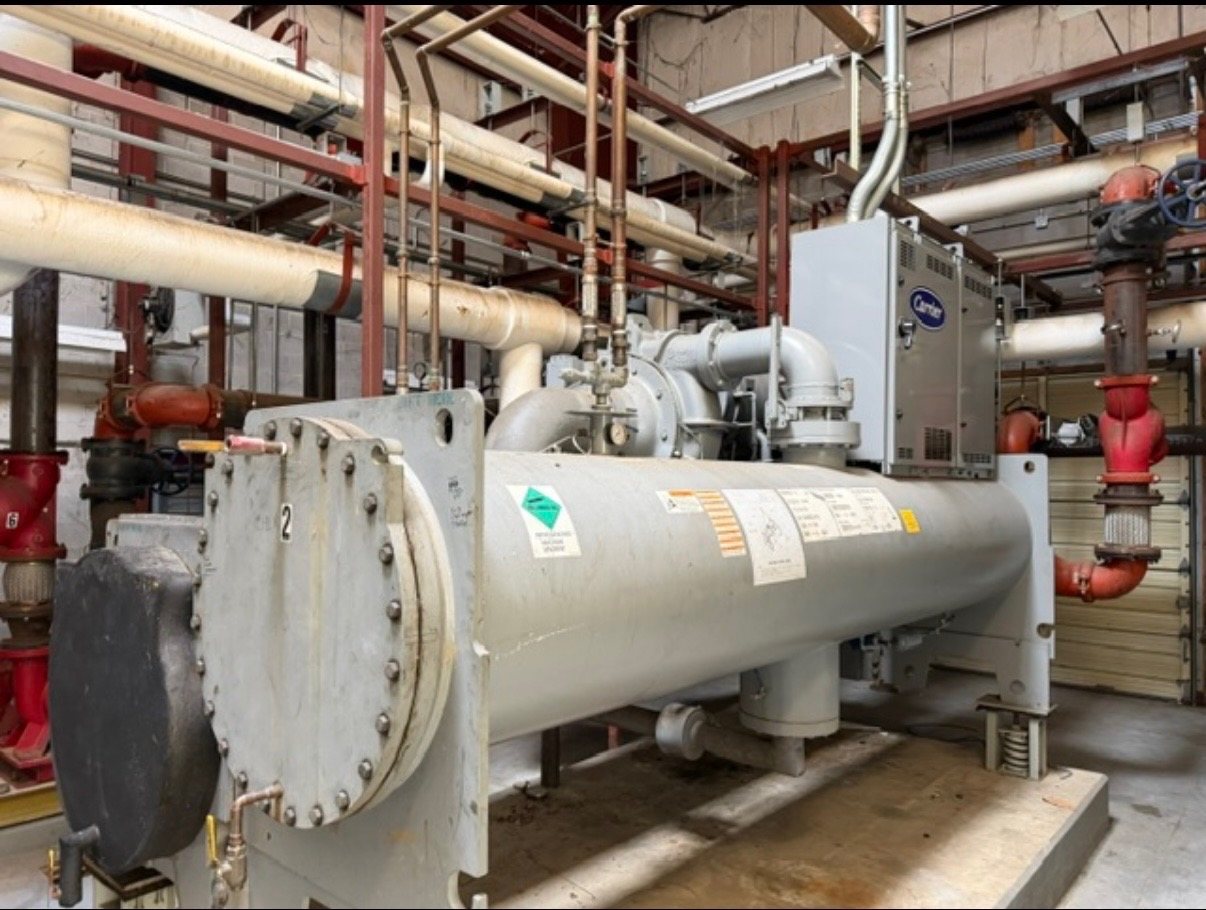
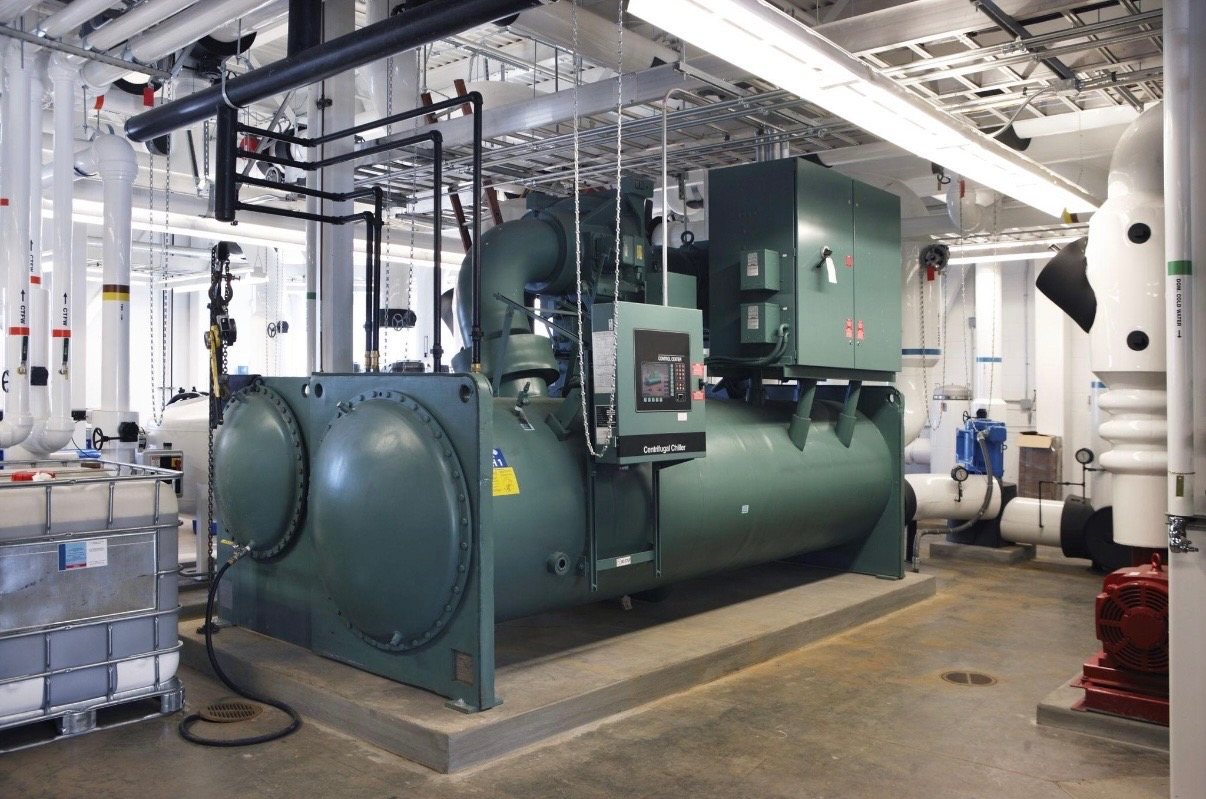
Send close photos of original and updated labels, the complete unit and any replacement control or starter cabinet. Note the rated capacity as stated, if known.
Read the manufacturer, complete model and serial number from the chiller itself. Record rated cooling capacity, voltage, phase and the refrigerant on the unit plate if visible. A separate starter or variable-frequency drive can have its own label and may sit in another room. Photograph both and say whether the cabinet is included; a picture of a building automation panel alone does not identify the chiller.
Condition is information, not a testing requirement
A long shutdown, obsolete controls, missing records or a past refrigerant conversion are facts to disclose, not reasons to test the unit.
Visible corrosion, coil damage, water staining or missing insulation should be shown in photographs rather than concealed. The buyer can consider the equipment as-is while also planning how its condition affects safe handling.
We consider used, surplus and non-running chillers, including equipment of unknown operating condition. There is no need to restore power, repair a fault or perform a performance test to ask for a cash offer. Accurate disclosure and a possible site access review are different from requiring the machine to operate.
Separate the chiller from live plant systems
The buyer coordinates and pays for the agreed disconnects and refrigerant recovery. Before the chiller is released, the facility representative should identify which water circuits, electrical feeds and controls serve other equipment. Qualified personnel plan isolation and recovery for the actual system. A machine that is not running can still contain refrigerant, fluid or stored electrical energy; do not cut, drain or vent it to obtain an offer.
Plan for basement or interior equipment
Show the route through the mechanical room and note whether older piping, enclosures or other later additions now limit access.
An interior machine may have to pass through a service corridor, opening, ramp or other constrained route. Photograph each transition and describe any surfaces or adjacent machinery that need protection. The buyer coordinates and pays for agreed rigging, crane work if needed, loading and freight. Qualified personnel determine whether a route is viable and whether any separation is appropriate for that specific machine.
Confirm ownership before release
An equipment owner, tenant and building owner may not be the same party. Identify who can authorize the sale and who can grant site access, including any financing or lease questions that need to be resolved. We offer cash and pay upfront before pickup after acceptance. The written scope should identify the chiller and the disconnect, recovery, rigging and freight work the buyer will cover.
If the chiller is being replaced, tell us when it will actually be released and which plant services must remain live. A replacement schedule and a completed isolation are different things.
What to send for a useful first conversation
Send a wide picture of the entire chiller and a readable nameplate photo. Add the pickup address or city, the unit’s location in the building, and the name of the authorized equipment owner. Say whether controls or a separate starter are included and describe any known faults. A picture of the service exit helps the buyer understand how it may be removed.
For a chiller labeled McQuay in Hamilton, include the location and a contact who can confirm the asset and arrange site access. If a detail is unavailable, say so instead of taking an unsafe photograph or guessing at the specifications.
Does cooling tonnage equal equipment weight?
No. Cooling tons measure capacity, not the weight of the assembly. We consider all tonnages, including 20 to 2,000+ tons. A removal crew needs the actual dimensions and verified weight, not an estimate based on the capacity label.