What to know about McQuay chillers
For an older McQuay-labeled chiller, legible original tags and subsequent retrofit records are particularly useful. A maintenance document may use a different company name from the badge on the machine, so provide both when available without assuming the model or refrigerant has stayed unchanged.
A chiller labeled McQuay in Akron may be surplus after a plant upgrade, building closure or cooling-system replacement. Identify the exact machine rather than the entire plant, and specify whether the starter or drive is part of the proposed purchase.
Plan the pickup at your Akron site
Akron is in Summit County. An Akron facility may have a packaged unit outdoors or a central-plant machine below occupied floors. Identify the floor, service entrance and any equipment that remains in operation. Where the route crosses an occupied area, agree on protection and movement windows with the site representative before a removal plan is finalized.
Tell us about known site restrictions before scheduling. A site contact can explain what is accessible, but the removal team must evaluate the actual route, load and work area.
Compare the machine and its electrical gear
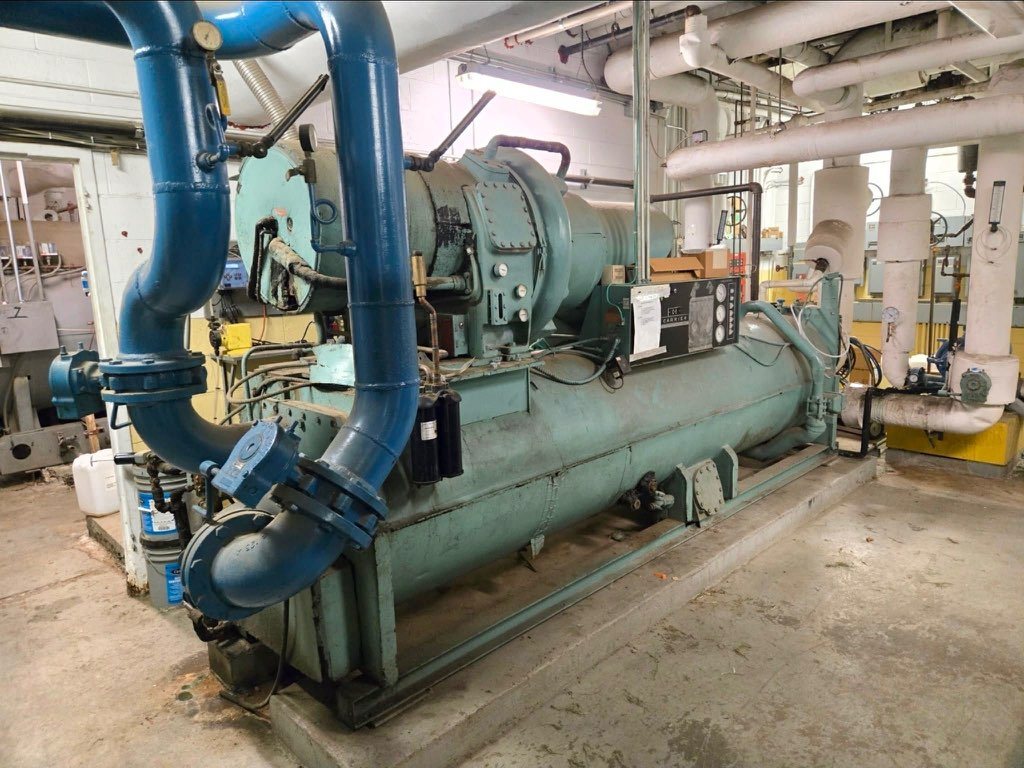
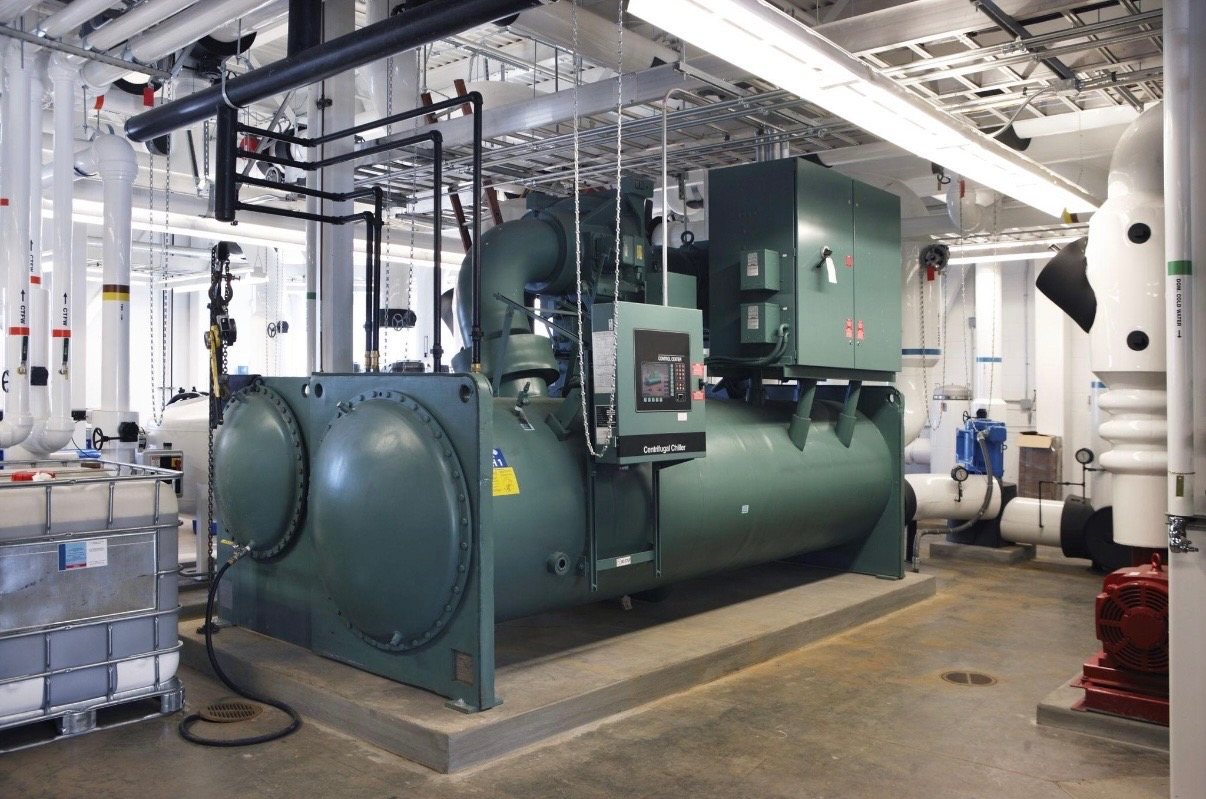
Send close photos of original and updated labels, the complete unit and any replacement control or starter cabinet. Note the rated capacity as stated, if known.
Read the manufacturer, complete model and serial number from the chiller itself. Record rated cooling capacity, voltage, phase and the refrigerant on the unit plate if visible. A separate starter or variable-frequency drive can have its own label and may sit in another room. Photograph both and say whether the cabinet is included; a picture of a building automation panel alone does not identify the chiller.
Condition is information, not a testing requirement
A long shutdown, obsolete controls, missing records or a past refrigerant conversion are facts to disclose, not reasons to test the unit.
A long idle period can leave the maintenance history incomplete. Give the last known status and distinguish what you observed from what an old record says. An unreadable label or an unknown fault is better described honestly than filled in with a guess.
We consider used, surplus and non-running chillers, including equipment of unknown operating condition. There is no need to restore power, repair a fault or perform a performance test to ask for a cash offer. Accurate disclosure and a possible site access review are different from requiring the machine to operate.
Confirm electrical and controls boundaries
A chiller can have power and control connections in different places, including a separate starter or drive. Tell the buyer where those cabinets are and which building controls remain. The buyer covers the agreed disconnects and refrigerant recovery, using appropriately qualified personnel. Do not remove covers, disconnect wiring, reset controls or assume that a blank display means the system is electrically safe.
Protect equipment that stays behind
Show the route through the mechanical room and note whether older piping, enclosures or other later additions now limit access.
Mark the chiller to be sold and photograph nearby systems that must remain. The route may pass sensitive controls, an occupied area or active machinery. The buyer coordinates and covers agreed rigging, crane if needed, loading and freight; the site representative helps identify operating boundaries and access restrictions. Rigging professionals choose methods after assessing the equipment, lift points and building conditions.
Document an as-is purchase
A clear as-is discussion distinguishes known faults from missing information. Provide photographs and describe removed components or an uncertain history; a running test is not required. We consider those facts alongside the removal requirements when making a cash offer. If accepted, payment is upfront before pickup. Confirm the machine, included accessories and buyer-paid scope rather than relying on an informal verbal description.
Where records conflict, share both the installed equipment label and the inventory sheet. The buyer can resolve questions during review rather than assuming that a single old schedule describes the present machine.
What to send for a useful first conversation
For a restricted property, explain who authorizes access and whether the machine can be visited or photographed safely. Provide the available nameplate data and a view of the chiller and its surroundings. Note any access controls, active neighboring equipment and expected release conditions. The buyer needs these facts to plan removal, not a performance demonstration.
For a chiller labeled McQuay in Akron, include the location and a contact who can confirm the asset and arrange site access. If a detail is unavailable, say so instead of taking an unsafe photograph or guessing at the specifications.
Can a non-running machine be sold?
Yes. We consider non-running and unknown-condition equipment, and do not require a performance test. Describe known defects and missing parts so an offer can reflect the machine as it sits. Site access and safe removal still need to be evaluated.