What to know about Daikin chillers
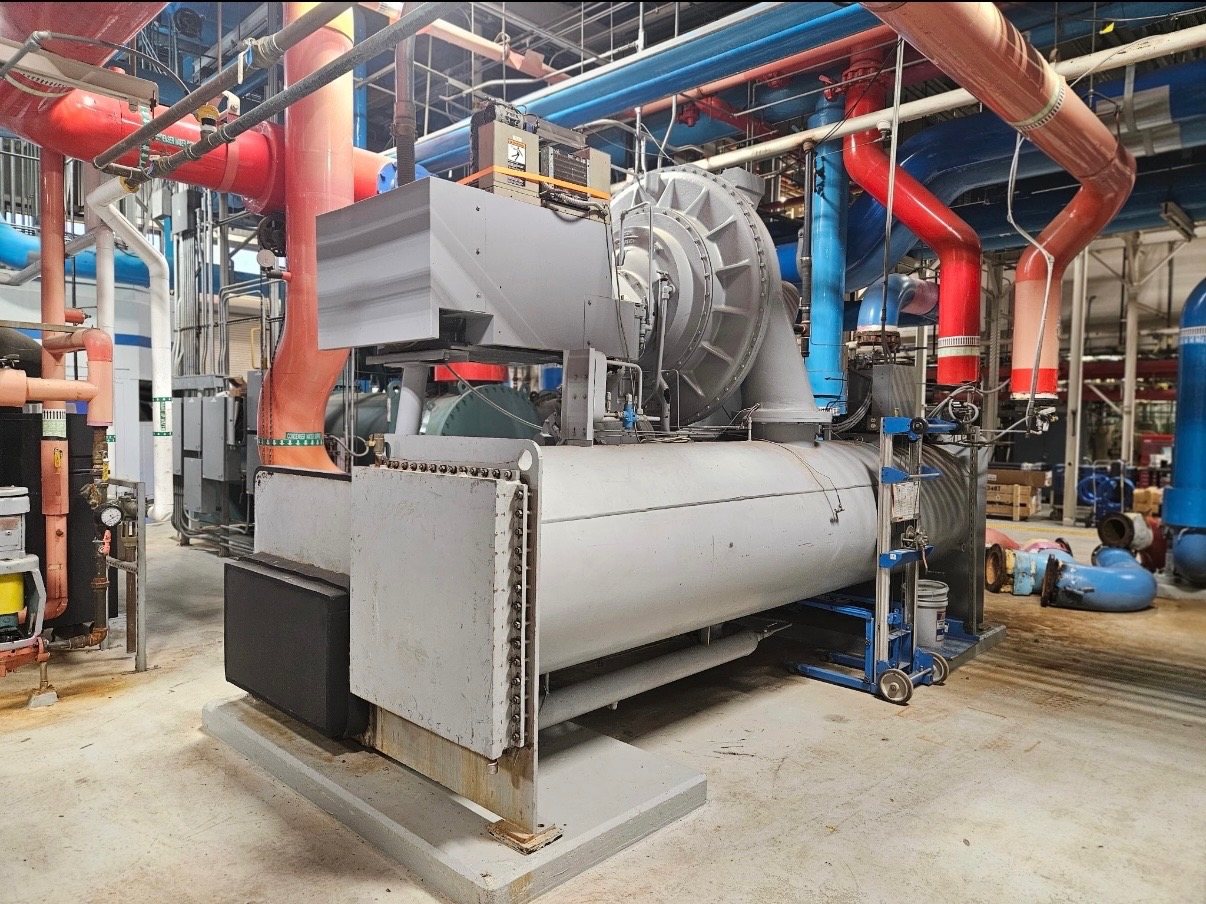
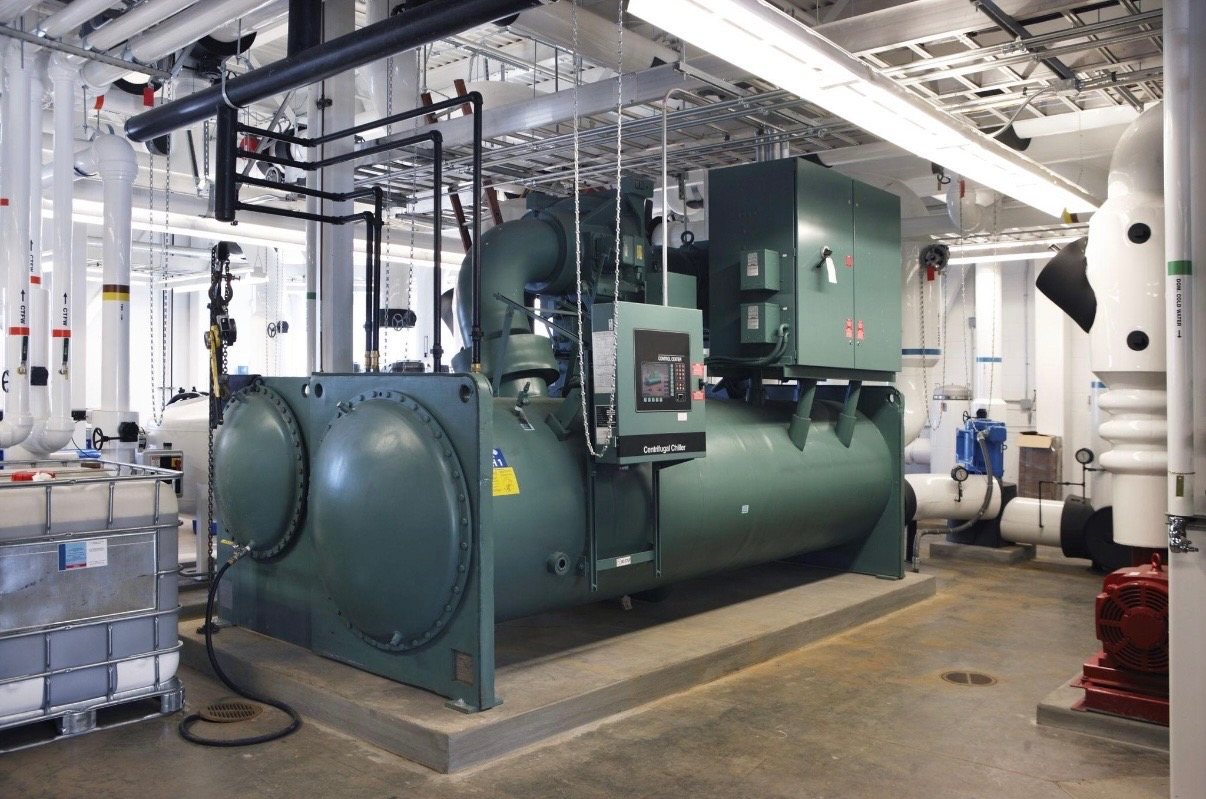
Daikin equipment should be identified by the name on the actual chiller and the full model information, not merely by a building inventory. Some sites also have older McQuay-labeled equipment; send the label that is present rather than guessing at a replacement designation.
A chiller labeled Daikin in Canton may be surplus after a plant upgrade, building closure or cooling-system replacement. Identify the exact machine rather than the entire plant, and specify whether the starter or drive is part of the proposed purchase.
Plan the pickup at your Canton site
Canton is in Stark County. For a Canton-area equipment room, distinguish a whole chiller from adjacent pumps, switchgear and pipework that will remain. Tell us if a forklift or crane could approach the proposed exit and whether a truck can stage on the property. Exact clearances and load-bearing surfaces should be confirmed during planning.
Tell us about known site restrictions before scheduling. A site contact can explain what is accessible, but the removal team must evaluate the actual route, load and work area.
Inventory multiple machines separately
Photograph the nameplate, controller, overall frame and any separate drive or starter included in the transaction. Include the actual refrigerant marking.
When a plant has several chillers, use the physical position or site asset number to match each wide photo to its own nameplate. List manufacturer, model, serial, capacity, voltage and refrigerant for each unit where known. Similar cabinets can conceal different equipment or service histories. Specify whether the offer should cover one machine, a selected group or all of the machines identified.
Condition is information, not a testing requirement
Explain whether the machine is complete, has been modified, or has an unknown service history. It is not necessary to run it for an initial review.
Visible corrosion, coil damage, water staining or missing insulation should be shown in photographs rather than concealed. The buyer can consider the equipment as-is while also planning how its condition affects safe handling.
We consider used, surplus and non-running chillers, including equipment of unknown operating condition. There is no need to restore power, repair a fault or perform a performance test to ask for a cash offer. Accurate disclosure and a possible site access review are different from requiring the machine to operate.
Separate the chiller from live plant systems
The buyer coordinates and pays for the agreed disconnects and refrigerant recovery. Before the chiller is released, the facility representative should identify which water circuits, electrical feeds and controls serve other equipment. Qualified personnel plan isolation and recovery for the actual system. A machine that is not running can still contain refrigerant, fluid or stored electrical energy; do not cut, drain or vent it to obtain an offer.
Use drawings without treating them as a lift plan
Give the unit dimensions and the narrowest clearance along its proposed exit, including any overhead piping that cannot be moved.
Existing dimensions, rigging drawings or documented weights can help frame the job, especially for a large central-plant unit. Tell us whether they describe the installed configuration or an earlier one. The buyer covers agreed rigging, crane if needed, loading, freight and hauling. The crew still verifies current obstacles, floor capacity, actual weight and lifting points before moving the equipment.
List a group of assets accurately
If you offer several chillers, identify each machine and whether the offer applies to the group or individual units. List separately located starters, drives or controls and state whether they are included. We make a cash offer and pay upfront before pickup after acceptance. The agreed purchase documents should describe what the buyer removes and the associated recovery, rigging and freight work.
If the chiller is being replaced, tell us when it will actually be released and which plant services must remain live. A replacement schedule and a completed isolation are different things.
What to send for a useful first conversation
Send a wide picture of the entire chiller and a readable nameplate photo. Add the pickup address or city, the unit’s location in the building, and the name of the authorized equipment owner. Say whether controls or a separate starter are included and describe any known faults. A picture of the service exit helps the buyer understand how it may be removed.
For a chiller labeled Daikin in Canton, include the location and a contact who can confirm the asset and arrange site access. If a detail is unavailable, say so instead of taking an unsafe photograph or guessing at the specifications.
Does the owner need to hire a truck?
No. For the agreed purchase, the buyer covers loading, freight and hauling, as well as required disconnects, refrigerant recovery, rigging and crane work. The owner or site representative provides access and identifies the equipment to be sold.