What to know about R-744 / CO₂ chillers
R-744 is carbon dioxide. Equipment and circuits designed for it can involve high pressures, so a buyer needs the exact machine and charge information before planning removal.
We consider chillers using all refrigerants, including equipment labeled R-744 / CO₂. A refrigerant label is only one part of the offer: the complete machine, its condition, included components and the pickup route also matter. Do not infer the current charge from a model name.
Plan the pickup at your Ohio site
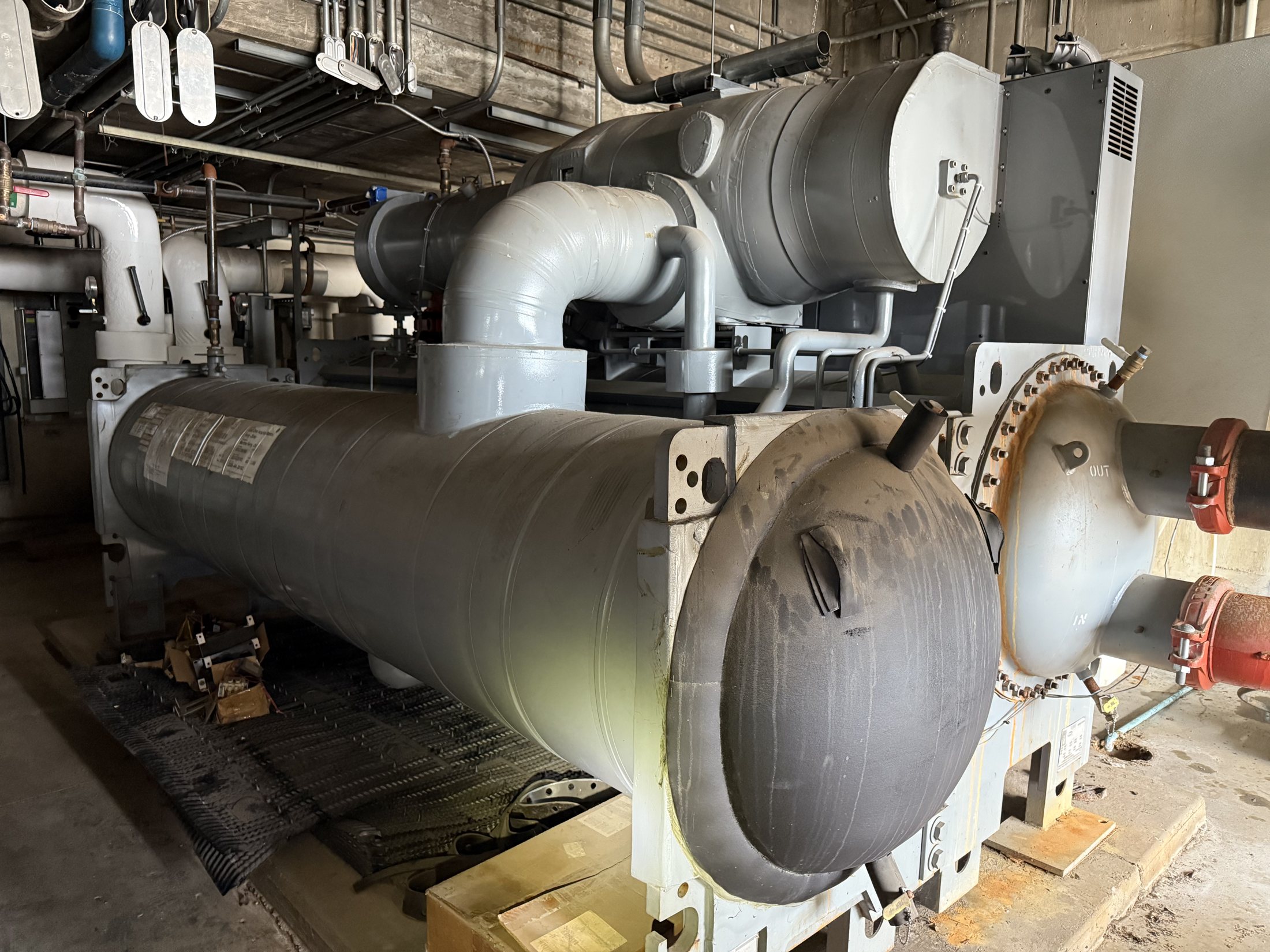
Ohio pickup planning starts at the exact equipment location, not just the mailing address. Show the machine in its room or on its pad, the intended exit, the route to a truck and any locked gates. Tell us who can approve access and whether nearby equipment needs to stay in service. A roof, basement and outdoor yard each present different handling questions.
Tell us about known site restrictions before scheduling. A site contact can explain what is accessible, but the removal team must evaluate the actual route, load and work area.
Compare the machine and its electrical gear
Capture the full refrigerant marking, nameplate, pressure-related labels and the unit model. Mention any uncertainty about the present charge.
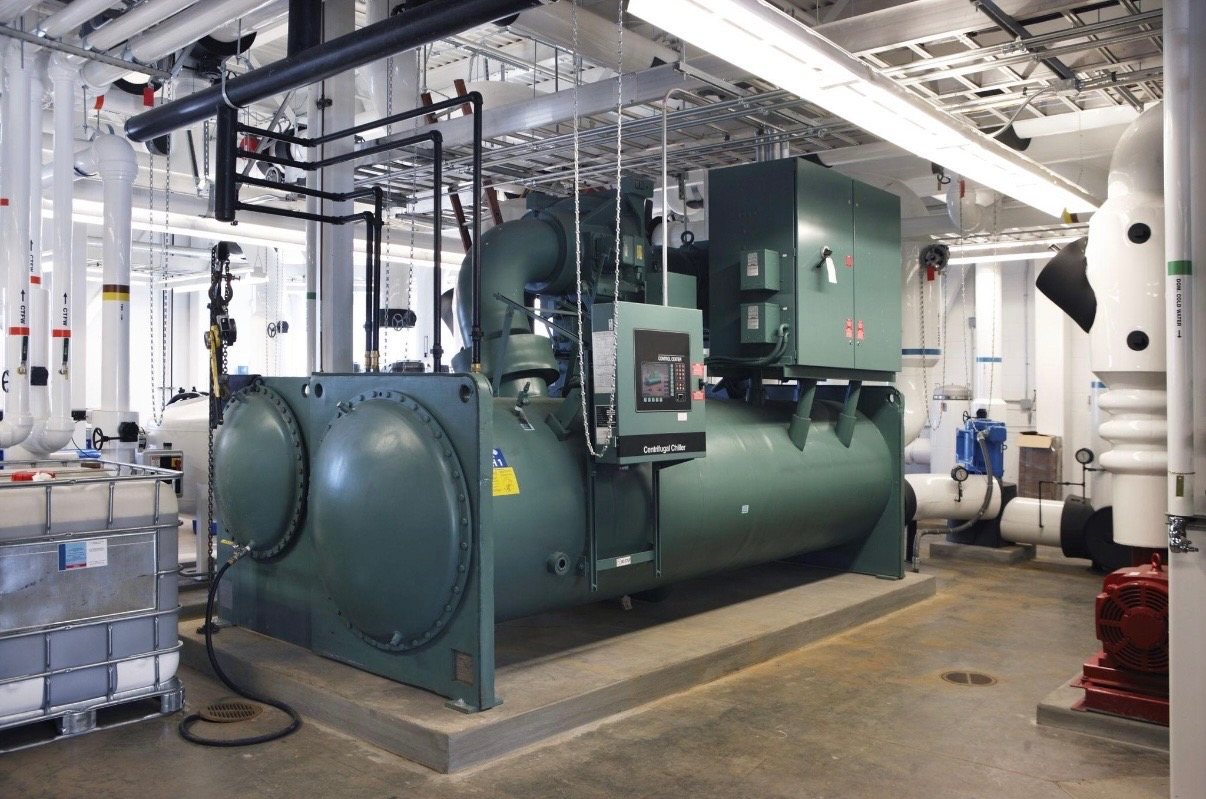
Read the manufacturer, complete model and serial number from the chiller itself. Record rated cooling capacity, voltage, phase and the refrigerant on the unit plate if visible. A separate starter or variable-frequency drive can have its own label and may sit in another room. Photograph both and say whether the cabinet is included; a picture of a building automation panel alone does not identify the chiller.
Condition is information, not a testing requirement
Disclose any known leak, prior recovery or conversion. The actual charge can be unknown; do not restart the chiller or open a fitting to find out.
A long idle period can leave the maintenance history incomplete. Give the last known status and distinguish what you observed from what an old record says. An unreadable label or an unknown fault is better described honestly than filled in with a guess.
We consider used, surplus and non-running chillers, including equipment of unknown operating condition. There is no need to restore power, repair a fault or perform a performance test to ask for a cash offer. Accurate disclosure and a possible site access review are different from requiring the machine to operate.
Plan for water or process-fluid connections
The chiller may have water or process-fluid piping in addition to its refrigerant circuit. Tell the buyer which connections are still attached, whether fluid condition is known and what nearby equipment has to stay. The buyer coordinates and pays for agreed disconnects and refrigerant recovery. The site should identify the system boundaries; personnel doing the work determine the appropriate isolation and handling steps.
Use drawings without treating them as a lift plan
Do not open valves or assume a pressure gauge is safe to interpret. Qualified personnel must assess the actual system and the applicable removal procedure.
Existing dimensions, rigging drawings or documented weights can help frame the job, especially for a large central-plant unit. Tell us whether they describe the installed configuration or an earlier one. The buyer covers agreed rigging, crane if needed, loading, freight and hauling. The crew still verifies current obstacles, floor capacity, actual weight and lifting points before moving the equipment.
List a group of assets accurately
If you offer several chillers, identify each machine and whether the offer applies to the group or individual units. List separately located starters, drives or controls and state whether they are included. We make a cash offer and pay upfront before pickup after acceptance. The agreed purchase documents should describe what the buyer removes and the associated recovery, rigging and freight work.
If a drive, starter or controller sits in another room, describe it separately and establish whether it is included. An offer is clearer when both the machine and its associated accessories are specifically listed.
What to send for a useful first conversation
Start with an asset list: manufacturer, model, serial, rated capacity, refrigerant and the location of each machine. Identify which units are surplus and whether they are still connected. Add photographs showing the room, pad or roof and the route toward a loading area. If the records are incomplete, mark unknown items rather than guessing or starting the machine.
For a chiller marked R-744 / CO₂ in Ohio, include the location and a contact who can confirm the asset and arrange site access. If a detail is unavailable, say so instead of taking an unsafe photograph or guessing at the specifications.
What if the refrigerant is unknown?
Tell us the refrigerant is unknown and share any original or later labels you can safely photograph. We consider all refrigerants. The buyer coordinates required recovery with qualified personnel; the owner should not open a circuit or release refrigerant to identify it.