What to know about hospital chillers
Hospital cooling equipment may serve occupied clinical areas, support spaces or a closed building. A chiller can be available only after replacement capacity is established or a specific plant section is released. Confirm the operational boundary with the facility’s authorized representative.
A facility representative in Youngstown can start with the asset identifier, the machine’s location and the operational systems that must remain in place. If the property is being vacated, identify who will provide access and authorize release after normal operations end.
Plan the pickup at your Youngstown site
Youngstown is in Mahoning County. At a Youngstown property with equipment left after a shutdown, identify which building and which machine are included. Long-idled utilities, disconnected controls or missing documentation should be disclosed rather than repaired just to request an offer. Pictures of the surrounding aisle and the available exterior door help assess removal.
Tell us about known site restrictions before scheduling. A site contact can explain what is accessible, but the removal team must evaluate the actual route, load and work area.
Reconcile original and later labels
Identify the machine by its equipment tag, model and serial number; note which controls, starter and auxiliary items transfer with it.
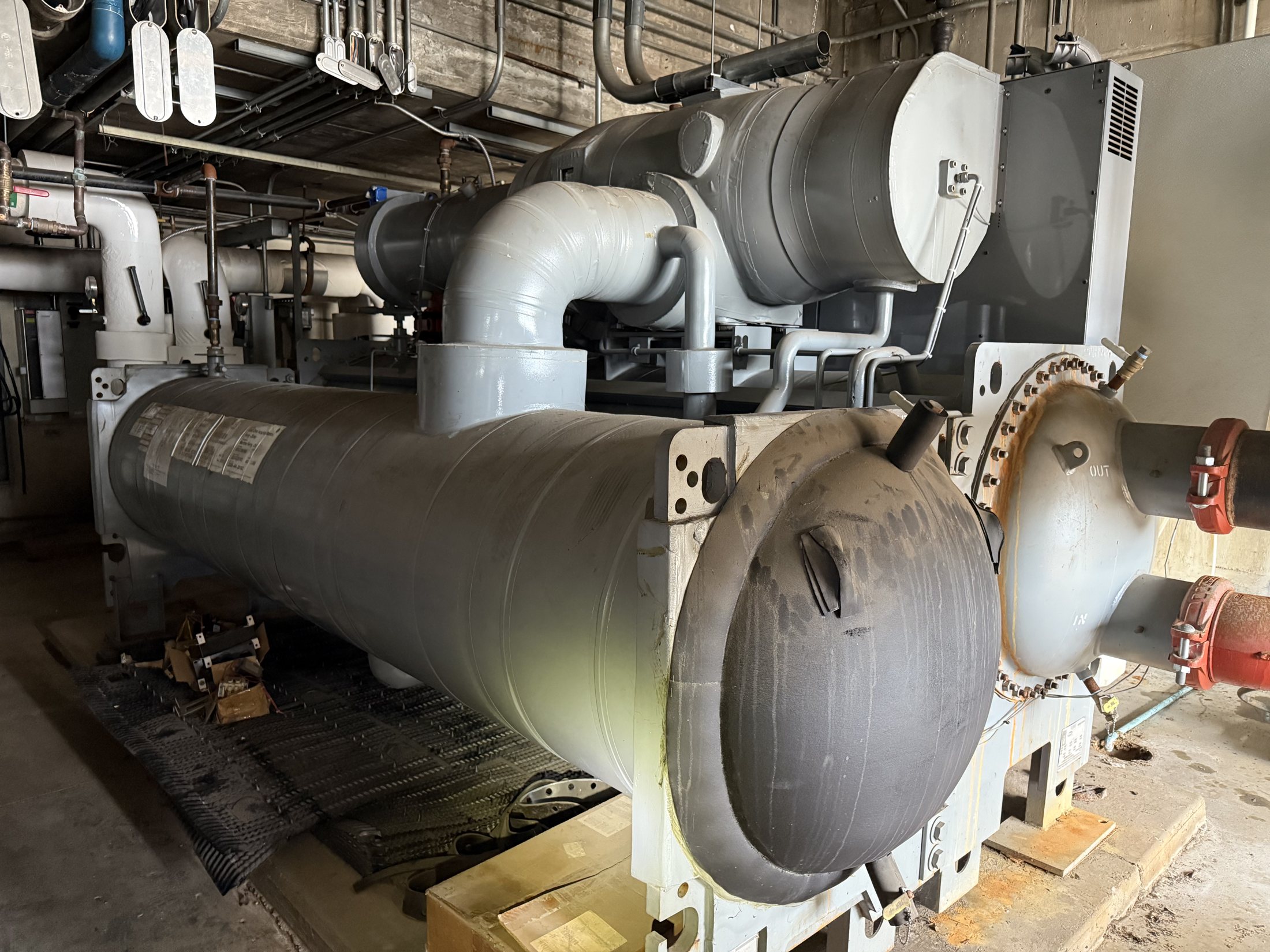
An old equipment schedule, an original nameplate and a later service tag may not all describe the same configuration. Photograph the unit label and any retrofit or conversion markings without removing covers. Supply the model, serial, capacity, voltage and stated refrigerant. If the documents disagree, share the conflict instead of choosing the answer that sounds most likely; the buyer can follow up on the actual equipment.
Condition is information, not a testing requirement
If the machine is retired, disconnected or no longer operational, describe its status without attempting to restart it. A cash offer does not require a performance test.
If components were removed for another project, identify which ones are missing and photograph the remaining assembly. A machine with an incomplete control cabinet is different from a complete machine with an inoperable display, and both can be discussed without a test.
We consider used, surplus and non-running chillers, including equipment of unknown operating condition. There is no need to restore power, repair a fault or perform a performance test to ask for a cash offer. Accurate disclosure and a possible site access review are different from requiring the machine to operate.
Confirm electrical and controls boundaries
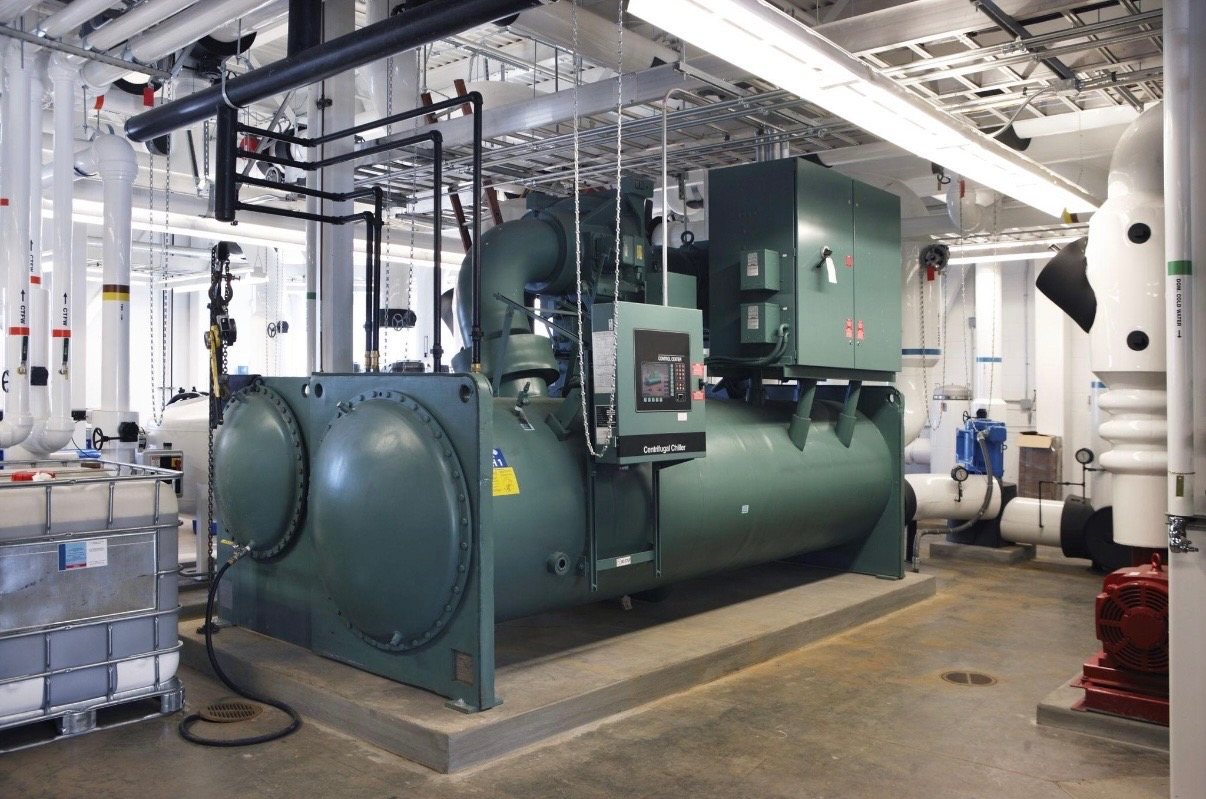
A chiller can have power and control connections in different places, including a separate starter or drive. Tell the buyer where those cabinets are and which building controls remain. The buyer covers the agreed disconnects and refrigerant recovery, using appropriately qualified personnel. Do not remove covers, disconnect wiring, reset controls or assume that a blank display means the system is electrically safe.
Measure the path from room to truck
Plan access with facilities staff around occupied areas, protective barriers and emergency routes. Shared utilities and adjacent live cooling systems must remain undisturbed.
The buyer covers agreed rigging, crane work if needed, loading, freight and hauling. Give the width and height of the narrowest opening, the distance to the loading point and any turns or changes of level. The chiller may have been installed before walls, cables or other equipment were added. A rigging crew verifies actual weight, lifting points and floor capacity; the owner should not try to move the machine for a quote.
Resolve uncertainty before pickup
An initial inquiry can start with imperfect information, but material uncertainty about ownership, equipment scope or access should be addressed in the agreed plan. Share conflicting records or missing details openly. We make a cash offer and pay upfront before pickup once an offer is accepted. Confirm the payment method, equipment and buyer-paid disconnect, recovery, rigging and transport scope in writing.
If the chiller is being replaced, tell us when it will actually be released and which plant services must remain live. A replacement schedule and a completed isolation are different things.
What to send for a useful first conversation
When a building is closing, collect the unit identification and current photographs while safe access is available. Record the person authorized to sell, the person who can provide entry after closure, and any known removal constraints. Tell us whether records, controls or components are missing; there is no need to repair or test the machine before asking for an offer.
For surplus hospital chillers in Youngstown, include the location and a contact who can confirm the asset and arrange site access. If a detail is unavailable, say so instead of taking an unsafe photograph or guessing at the specifications.
What if the refrigerant is unknown?
Tell us the refrigerant is unknown and share any original or later labels you can safely photograph. We consider all refrigerants. The buyer coordinates required recovery with qualified personnel; the owner should not open a circuit or release refrigerant to identify it.