What to know about commercial building chillers
A building upgrade, vacancy or change of ownership may create a surplus chiller while tenants or other building systems remain in place. Clarify whether the owner, property manager or another party is authorized to approve the equipment sale and provide access.
A facility representative in Cincinnati can start with the asset identifier, the machine’s location and the operational systems that must remain in place. If the property is being vacated, identify who will provide access and authorize release after normal operations end.
Plan the pickup at your Cincinnati site
Cincinnati is in Hamilton County. A Cincinnati pickup may be at an occupied building or a closed industrial property. The truck entrance, staging area and change in grade along the proposed removal route can matter more than the postal address alone. Let us know whether the unit sits indoors, on a roof, or on an exterior pad and whether access crosses another tenant’s space.
Tell us about known site restrictions before scheduling. A site contact can explain what is accessible, but the removal team must evaluate the actual route, load and work area.
Inventory multiple machines separately
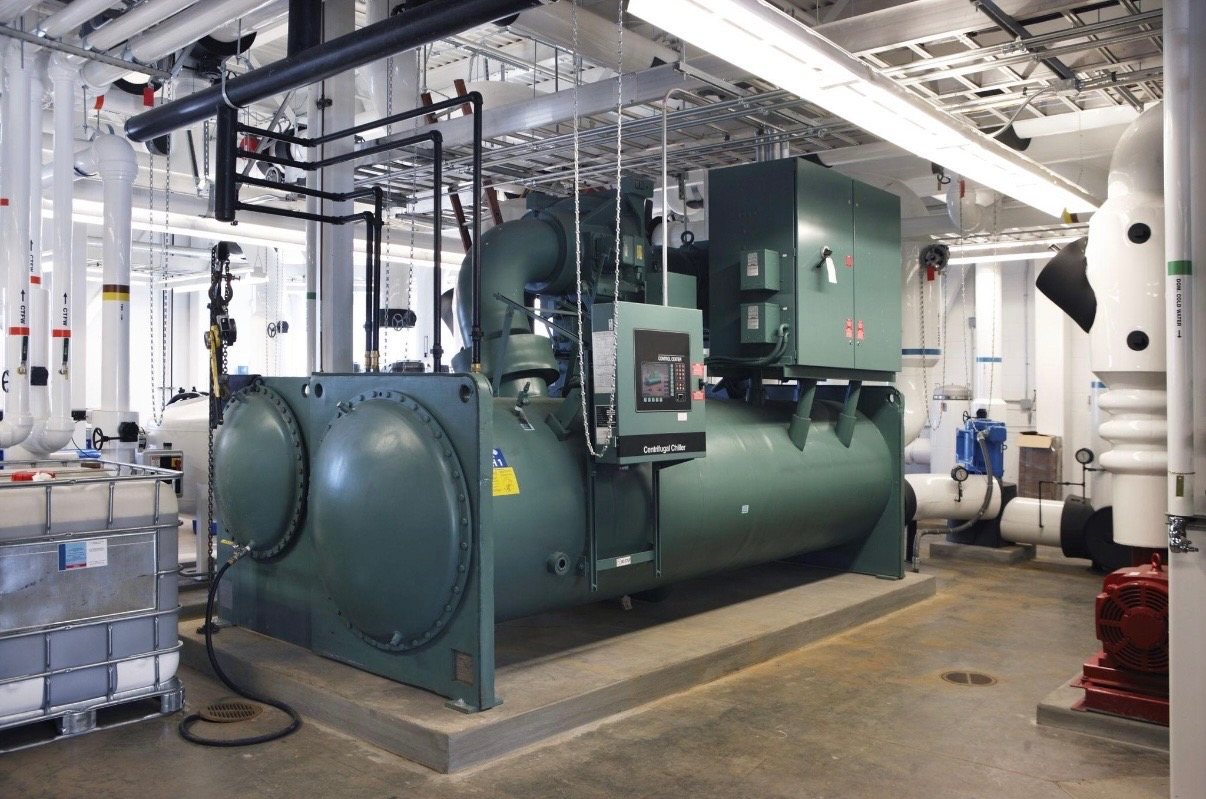
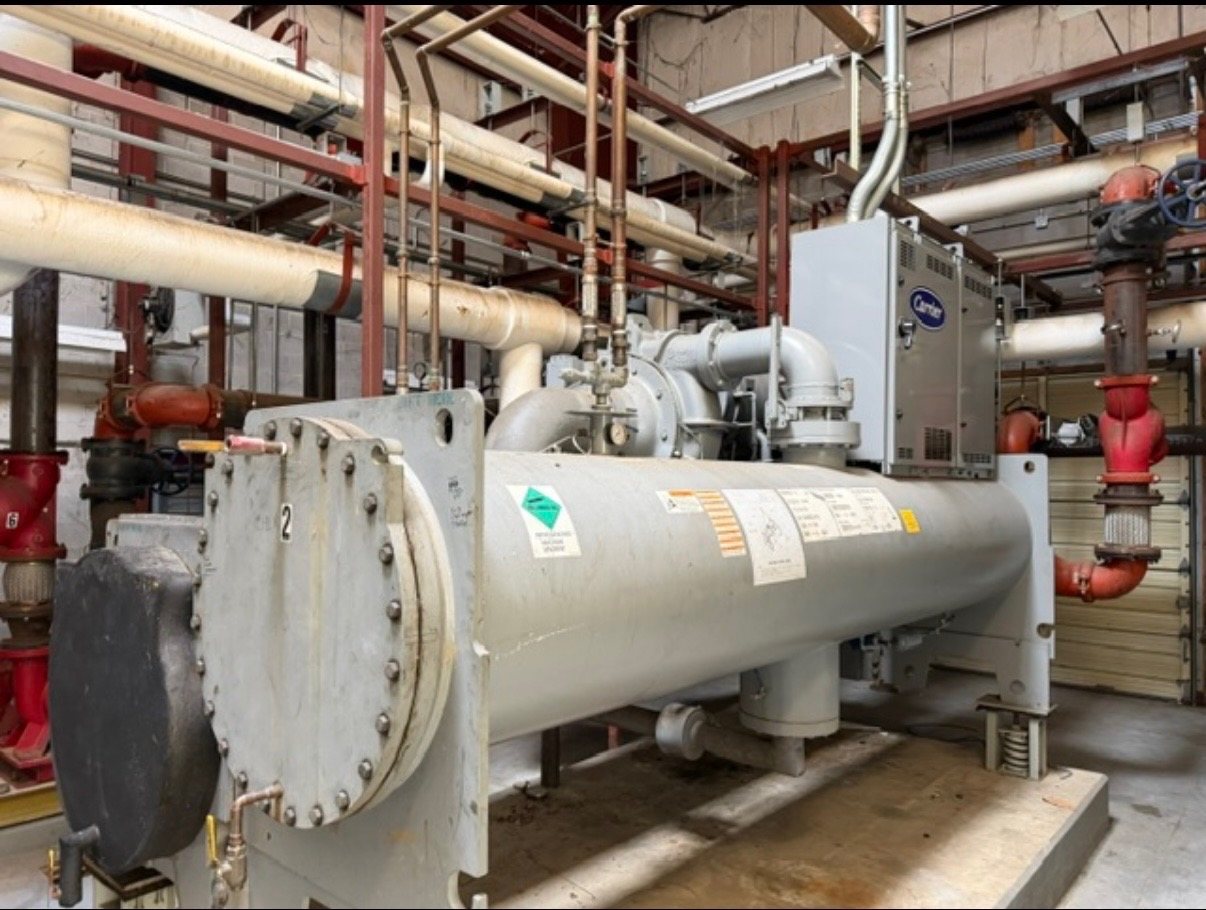
Use the chiller label rather than a tenant utility bill to identify capacity and refrigerant. Show the control panel and any remote starter included.
When a plant has several chillers, use the physical position or site asset number to match each wide photo to its own nameplate. List manufacturer, model, serial, capacity, voltage and refrigerant for each unit where known. Similar cabinets can conceal different equipment or service histories. Specify whether the offer should cover one machine, a selected group or all of the machines identified.
Condition is information, not a testing requirement
A retired machine may have been idle for years, and the prior maintenance record may be incomplete. Describe the known condition without running it for us.
A prior refrigerant conversion, controller replacement or major repair can change how the machine is identified. An original plate and later service label can both be useful; include the dates or records only if available.
We consider used, surplus and non-running chillers, including equipment of unknown operating condition. There is no need to restore power, repair a fault or perform a performance test to ask for a cash offer. Accurate disclosure and a possible site access review are different from requiring the machine to operate.
Identify the actual refrigerant safely
We consider all refrigerants and arrange qualified recovery when required as part of the agreed purchase. Photograph the original nameplate and any current conversion label, and pass along prior recovery records if available. A switched-off machine is not necessarily empty. Do not open a fitting or release refrigerant to check it. Appropriate personnel must assess the actual charge, circuit and applicable handling requirements.
Use drawings without treating them as a lift plan
Document service-lift limits, loading access, building protection requirements and any restrictions around occupied common areas or neighboring tenants.
Existing dimensions, rigging drawings or documented weights can help frame the job, especially for a large central-plant unit. Tell us whether they describe the installed configuration or an earlier one. The buyer covers agreed rigging, crane if needed, loading, freight and hauling. The crew still verifies current obstacles, floor capacity, actual weight and lifting points before moving the equipment.
Understand what an offer covers
The offer considers the identifiable equipment and the work needed for the agreed removal. We make a cash offer and, when it is accepted, pay upfront before pickup. Confirm the amount, payment method, included components and buyer-paid removal scope in the transaction documents. Do not assume a separate pump, control cabinet or other nearby asset transfers unless it is specifically listed.
Where records conflict, share both the installed equipment label and the inventory sheet. The buyer can resolve questions during review rather than assuming that a single old schedule describes the present machine.
What to send for a useful first conversation
Send a wide picture of the entire chiller and a readable nameplate photo. Add the pickup address or city, the unit’s location in the building, and the name of the authorized equipment owner. Say whether controls or a separate starter are included and describe any known faults. A picture of the service exit helps the buyer understand how it may be removed.
For surplus commercial building chillers in Cincinnati, include the location and a contact who can confirm the asset and arrange site access. If a detail is unavailable, say so instead of taking an unsafe photograph or guessing at the specifications.
What if another system must stay running?
Identify the live system and ask the facility representative to mark the boundary with the chiller being sold. The buyer plans the agreed disconnect and removal with qualified personnel. A site-specific review is different from testing the chiller for purchase.