What to know about cold storage chillers
A cold-storage property may have both building chillers and separate refrigeration equipment. Identify the liquid chiller actually offered, its service and its relationship to any systems that must keep product or occupied areas cold.
A facility representative in Cleveland can start with the asset identifier, the machine’s location and the operational systems that must remain in place. If the property is being vacated, identify who will provide access and authorize release after normal operations end.
Plan the pickup at your Cleveland site
Cleveland is in Cuyahoga County. For a Cleveland mechanical room, describe whether the route leaves through a basement, a service corridor, a roof opening, or a ground-level door. A water-cooled unit can have separate condenser-water piping, so a simple exterior photo is not enough to establish the lift plan. Explain any building access or neighboring-tenant restrictions.
Tell us about known site restrictions before scheduling. A site contact can explain what is accessible, but the removal team must evaluate the actual route, load and work area.
Reconcile original and later labels
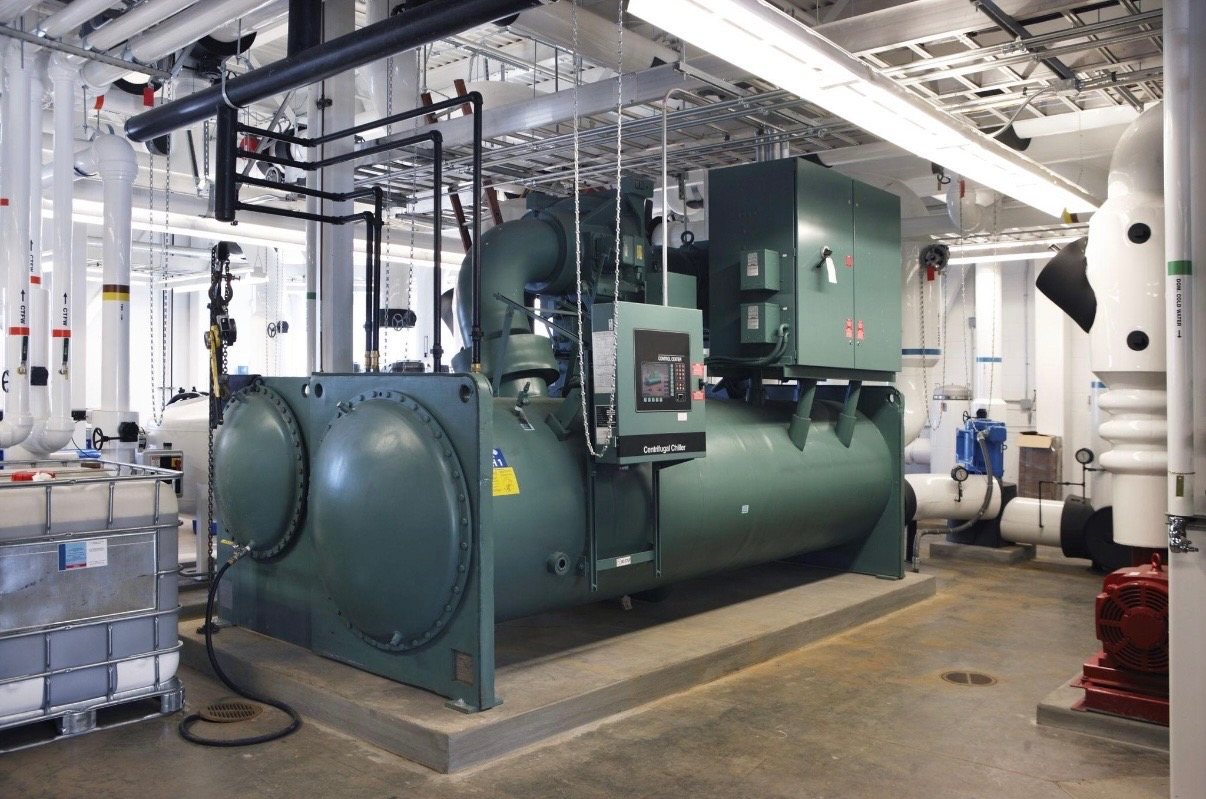
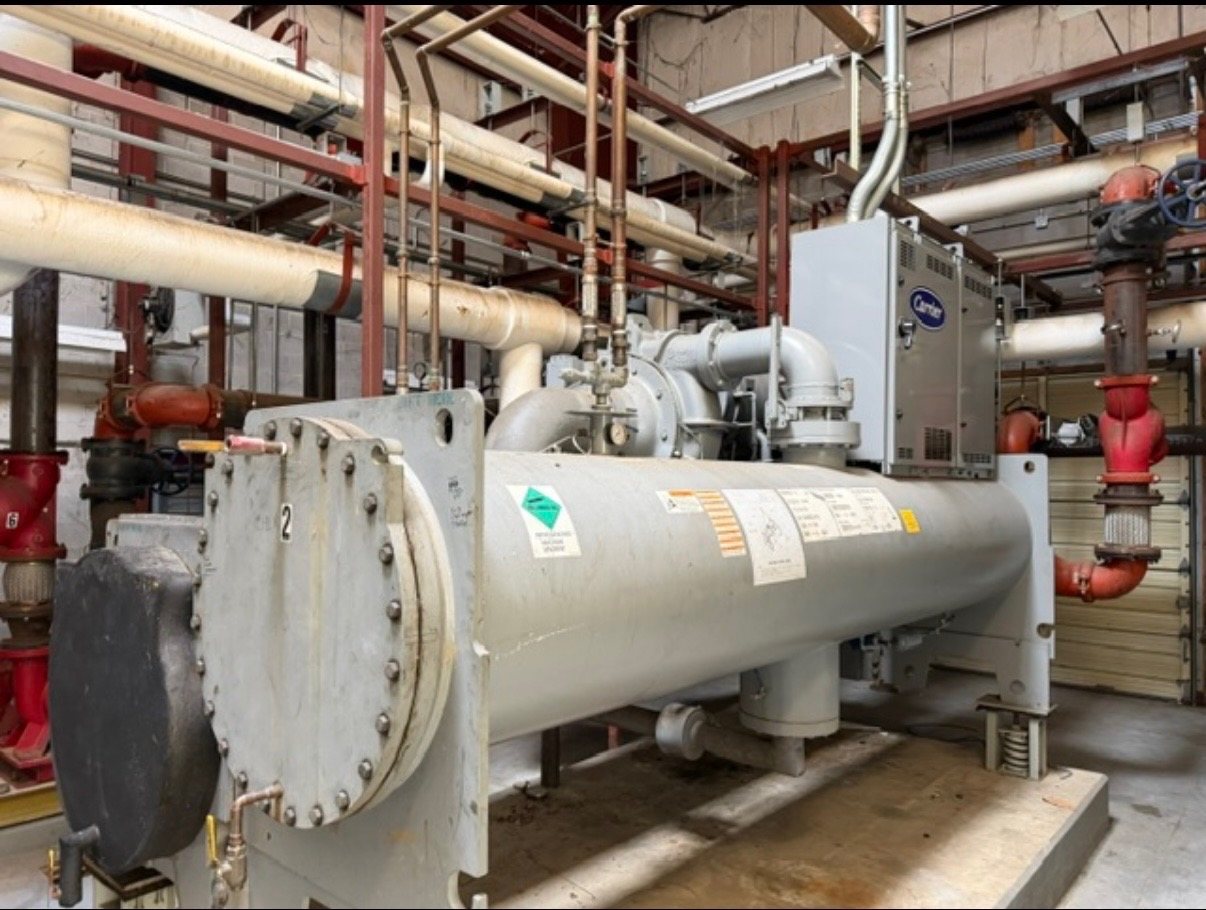
Send an image of the chiller nameplate and overall system, along with the installed refrigerant, capacity and whether related pumps or controls are included.
An old equipment schedule, an original nameplate and a later service tag may not all describe the same configuration. Photograph the unit label and any retrofit or conversion markings without removing covers. Supply the model, serial, capacity, voltage and stated refrigerant. If the documents disagree, share the conflict instead of choosing the answer that sounds most likely; the buyer can follow up on the actual equipment.
Condition is information, not a testing requirement
Tell us if the chiller has been replaced, is held as backup or has an uncertain condition. We do not require it to be started to begin a purchase discussion.
A machine described as spare may be disconnected, or it may still be connected and held for backup. Clarify its current release status and when the site can make it available; do not start it just to establish its value.
We consider used, surplus and non-running chillers, including equipment of unknown operating condition. There is no need to restore power, repair a fault or perform a performance test to ask for a cash offer. Accurate disclosure and a possible site access review are different from requiring the machine to operate.
Separate the chiller from live plant systems
The buyer coordinates and pays for the agreed disconnects and refrigerant recovery. Before the chiller is released, the facility representative should identify which water circuits, electrical feeds and controls serve other equipment. Qualified personnel plan isolation and recovery for the actual system. A machine that is not running can still contain refrigerant, fluid or stored electrical energy; do not cut, drain or vent it to obtain an offer.
Plan for basement or interior equipment
Confirm the buyer’s access route will not interfere with loading docks, stored product or an active refrigeration system. Identify the isolation boundary.
An interior machine may have to pass through a service corridor, opening, ramp or other constrained route. Photograph each transition and describe any surfaces or adjacent machinery that need protection. The buyer coordinates and pays for agreed rigging, crane work if needed, loading and freight. Qualified personnel determine whether a route is viable and whether any separation is appropriate for that specific machine.
List a group of assets accurately
If you offer several chillers, identify each machine and whether the offer applies to the group or individual units. List separately located starters, drives or controls and state whether they are included. We make a cash offer and pay upfront before pickup after acceptance. The agreed purchase documents should describe what the buyer removes and the associated recovery, rigging and freight work.
If the chiller is being replaced, tell us when it will actually be released and which plant services must remain live. A replacement schedule and a completed isolation are different things.
What to send for a useful first conversation
For a restricted property, explain who authorizes access and whether the machine can be visited or photographed safely. Provide the available nameplate data and a view of the chiller and its surroundings. Note any access controls, active neighboring equipment and expected release conditions. The buyer needs these facts to plan removal, not a performance demonstration.
For surplus cold storage chillers in Cleveland, include the location and a contact who can confirm the asset and arrange site access. If a detail is unavailable, say so instead of taking an unsafe photograph or guessing at the specifications.
Can a non-running machine be sold?
Yes. We consider non-running and unknown-condition equipment, and do not require a performance test. Describe known defects and missing parts so an offer can reflect the machine as it sits. Site access and safe removal still need to be evaluated.