What to know about campus chillers
A campus closure or central-plant upgrade can make one or more chillers surplus even when other buildings still depend on the chilled-water network. The sale scope should distinguish the individual machine from shared pumps, distribution piping and controls.
A facility representative in Dayton can start with the asset identifier, the machine’s location and the operational systems that must remain in place. If the property is being vacated, identify who will provide access and authorize release after normal operations end.
Plan the pickup at your Dayton site
Dayton is in Montgomery County. For a Dayton-area chiller, tell us whether pickup is from an active campus, an industrial building or a property being vacated. A site plan that marks the mechanical room, service exit and possible truck position can clarify the work. Do not assume a loading dock is suitable without sharing its height and available clearance.
Tell us about known site restrictions before scheduling. A site contact can explain what is accessible, but the removal team must evaluate the actual route, load and work area.
Define the asset at its boundaries
Provide the plant or building identifier, unit serial number, rated tons and nameplate photo. List multiple machines separately rather than assuming they are identical.
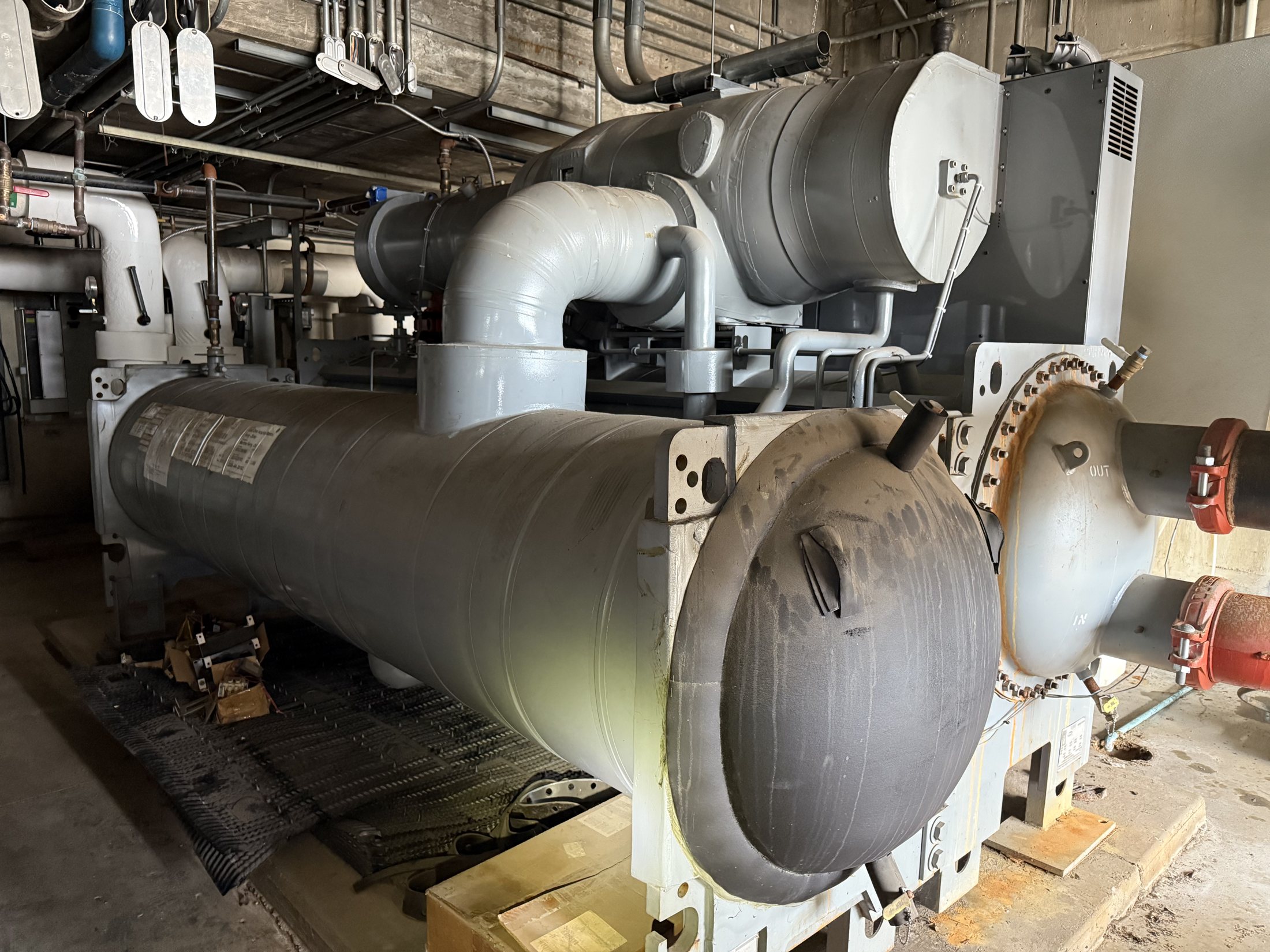
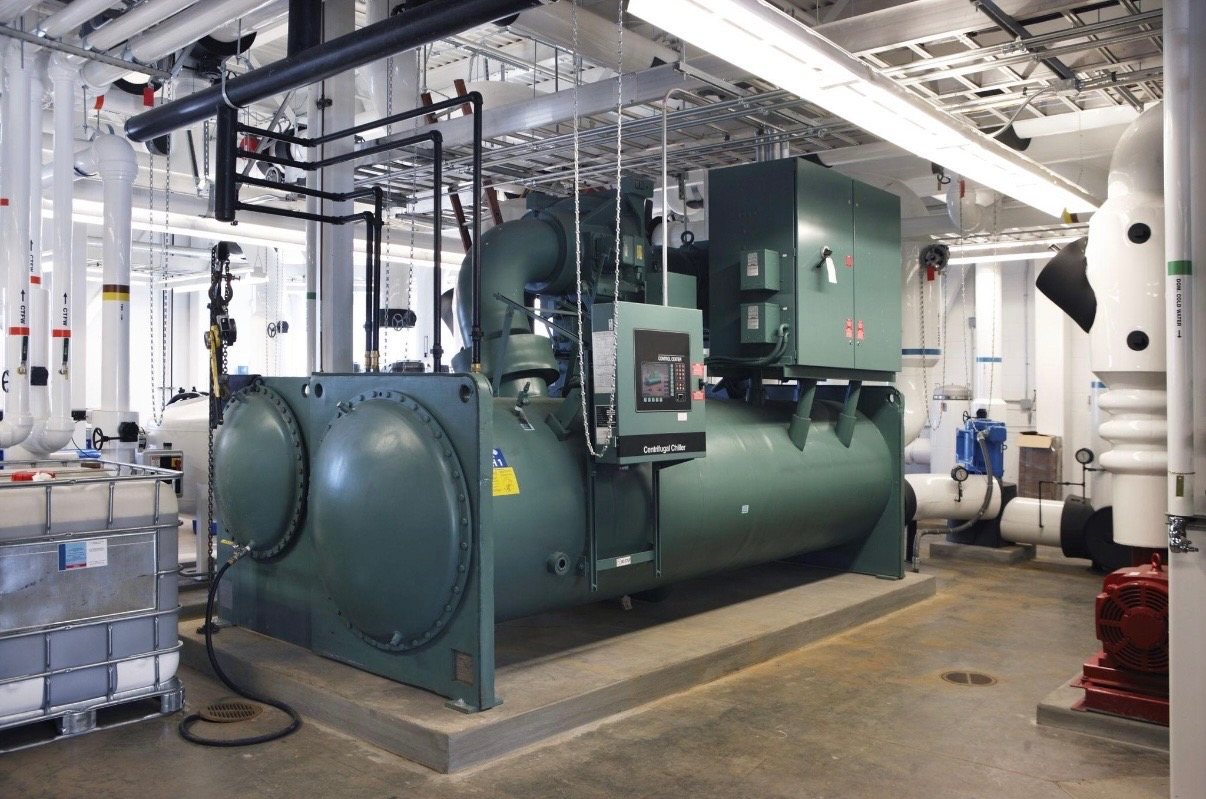
A chiller purchase is clearer when the owner identifies the machine, any matching starter or drive, and the controls that go with it. Photograph the complete assembly as well as its manufacturer, model, serial, capacity, voltage and refrigerant label. Note which pumps, tower, pipes and building controls must stay. A brand name on nearby equipment is not a substitute for a unit-level identification.
Condition is information, not a testing requirement
Let us know which machines are decommissioned, which remain connected and which have an unknown history. We can consider equipment without a running test.
If components were removed for another project, identify which ones are missing and photograph the remaining assembly. A machine with an incomplete control cabinet is different from a complete machine with an inoperable display, and both can be discussed without a test.
We consider used, surplus and non-running chillers, including equipment of unknown operating condition. There is no need to restore power, repair a fault or perform a performance test to ask for a cash offer. Accurate disclosure and a possible site access review are different from requiring the machine to operate.
Account for a closed or long-idled site
A former operator may not be present to explain the chiller’s status. Share the most recent records available and identify the person who controls the property and can authorize access to utility areas. The buyer coordinates and pays for the agreed disconnects and required refrigerant recovery. Unknown status should be treated as unknown, not as proof that the machine is empty or safe to cut.
Protect equipment that stays behind
Coordinate with the person responsible for the central plant, campus access and isolation schedule; confirm the exit route through occupied or locked spaces.
Mark the chiller to be sold and photograph nearby systems that must remain. The route may pass sensitive controls, an occupied area or active machinery. The buyer coordinates and covers agreed rigging, crane if needed, loading and freight; the site representative helps identify operating boundaries and access restrictions. Rigging professionals choose methods after assessing the equipment, lift points and building conditions.
List a group of assets accurately
If you offer several chillers, identify each machine and whether the offer applies to the group or individual units. List separately located starters, drives or controls and state whether they are included. We make a cash offer and pay upfront before pickup after acceptance. The agreed purchase documents should describe what the buyer removes and the associated recovery, rigging and freight work.
If the chiller is being replaced, tell us when it will actually be released and which plant services must remain live. A replacement schedule and a completed isolation are different things.
What to send for a useful first conversation
Start with an asset list: manufacturer, model, serial, rated capacity, refrigerant and the location of each machine. Identify which units are surplus and whether they are still connected. Add photographs showing the room, pad or roof and the route toward a loading area. If the records are incomplete, mark unknown items rather than guessing or starting the machine.
For surplus campus chillers in Dayton, include the location and a contact who can confirm the asset and arrange site access. If a detail is unavailable, say so instead of taking an unsafe photograph or guessing at the specifications.
What if the refrigerant is unknown?
Tell us the refrigerant is unknown and share any original or later labels you can safely photograph. We consider all refrigerants. The buyer coordinates required recovery with qualified personnel; the owner should not open a circuit or release refrigerant to identify it.