What to know about air-cooled chillers
Air-cooled chillers reject heat to outdoor air and may be located on a pad, roof or equipment deck. Their overall length, fan guards, coil condition and position relative to parapets affect both the evaluation and the way a crew can reach the machine.
For this Toledo purchase, describe the actual air-cooled chillers offered and distinguish the unit from any shared equipment that remains on site. The offer can include a plan for the buyer to remove it, rather than asking the owner to deliver it or run a test.
Plan the pickup at your Toledo site
Toledo is in Lucas County. For a Toledo site, identify the actual gate and contact who can admit a rigging and freight crew. A large industrial property can have several buildings and loading areas; a labeled site photograph helps distinguish the chiller from nearby process equipment. Note any bridge plates, floor limits or restricted turning space on the route.
Tell us about known site restrictions before scheduling. A site contact can explain what is accessible, but the removal team must evaluate the actual route, load and work area.
Separate cooling capacity from lifting weight
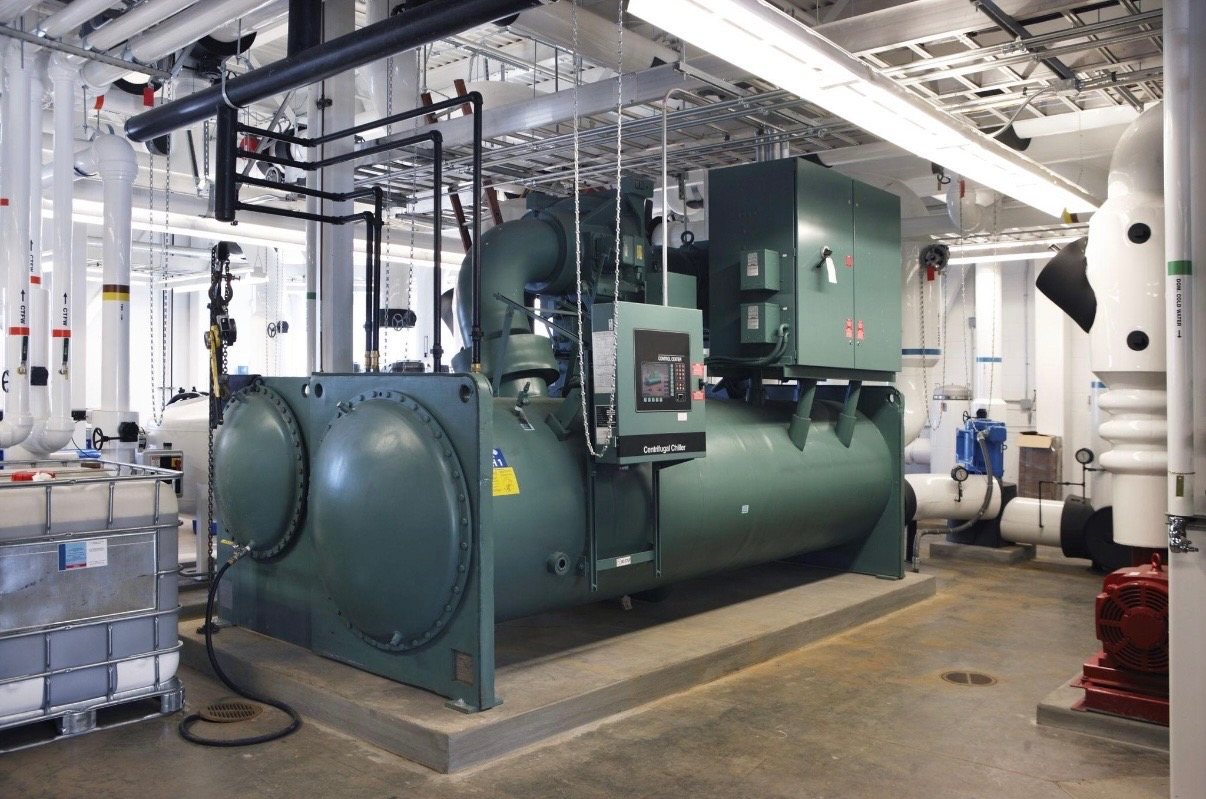
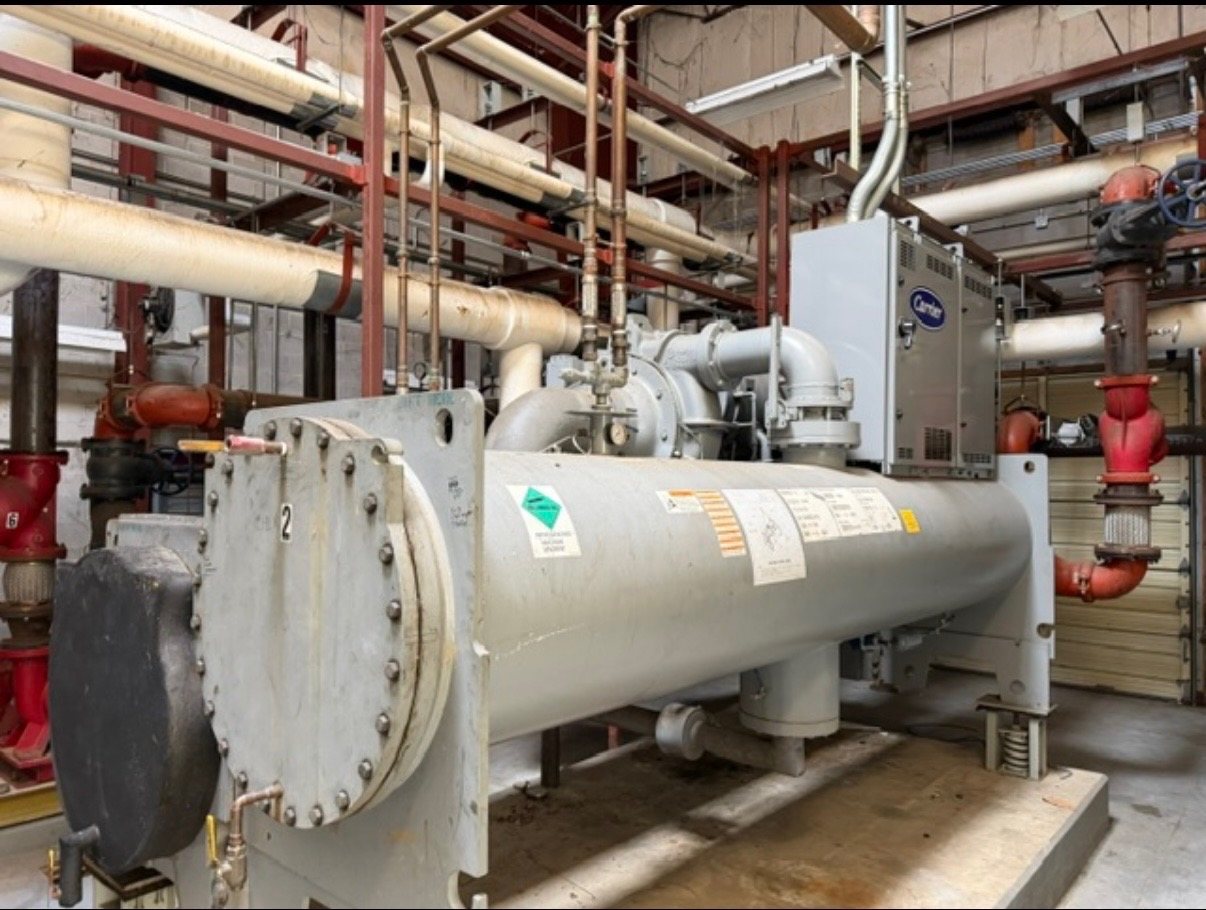
Capture the unit nameplate, a full-length image, fan sections and coil faces. Note if any external pump package is part of the sale.
Cooling tons describe refrigeration capacity, not the number of tons a machine weighs. The total capacity of a complete chiller also may differ from the rating of one compressor or module. Provide the model and serial, rated unit capacity, voltage and refrigerant from the chiller label. If a manufacturer drawing provides operating or shipping weight, share the document and identify which weight it states.
Condition is information, not a testing requirement
Disclose bent fins, weather damage, missing panels or a disconnected circuit. Cosmetic damage and an unknown operating history do not require a test before an offer.
Visible corrosion, coil damage, water staining or missing insulation should be shown in photographs rather than concealed. The buyer can consider the equipment as-is while also planning how its condition affects safe handling.
We consider used, surplus and non-running chillers, including equipment of unknown operating condition. There is no need to restore power, repair a fault or perform a performance test to ask for a cash offer. Accurate disclosure and a possible site access review are different from requiring the machine to operate.
Keep an occupied building operating
If the property remains occupied, tell the buyer which cooling services and access routes must remain available. A facility representative should establish the work boundaries before qualified personnel plan the actual disconnect and refrigerant recovery. We coordinate and pay for that work within the agreed purchase scope. The owner does not need to vent, drain or isolate the chiller to request a cash offer.
Evaluate an outdoor lift and staging area
A rooftop installation may need a lift over the building edge, while a fenced pad may require temporary access or a different loading position.
A pad or rooftop location is not enough information to select a crane. Show the unit and its surroundings, possible staging area, overhead obstructions and access for a truck. The buyer coordinates and covers agreed crane work when needed, rigging, loading, freight and hauling. Actual reach, ground support, clearance and equipment weight must be evaluated by the crew rather than estimated from cooling tons.
List a group of assets accurately
If you offer several chillers, identify each machine and whether the offer applies to the group or individual units. List separately located starters, drives or controls and state whether they are included. We make a cash offer and pay upfront before pickup after acceptance. The agreed purchase documents should describe what the buyer removes and the associated recovery, rigging and freight work.
If the chiller is being replaced, tell us when it will actually be released and which plant services must remain live. A replacement schedule and a completed isolation are different things.
What to send for a useful first conversation
Start with an asset list: manufacturer, model, serial, rated capacity, refrigerant and the location of each machine. Identify which units are surplus and whether they are still connected. Add photographs showing the room, pad or roof and the route toward a loading area. If the records are incomplete, mark unknown items rather than guessing or starting the machine.
For air-cooled chillers in Toledo, include the location and a contact who can confirm the asset and arrange site access. If a detail is unavailable, say so instead of taking an unsafe photograph or guessing at the specifications.
Does the owner need to hire a truck?
No. For the agreed purchase, the buyer covers loading, freight and hauling, as well as required disconnects, refrigerant recovery, rigging and crane work. The owner or site representative provides access and identifies the equipment to be sold.