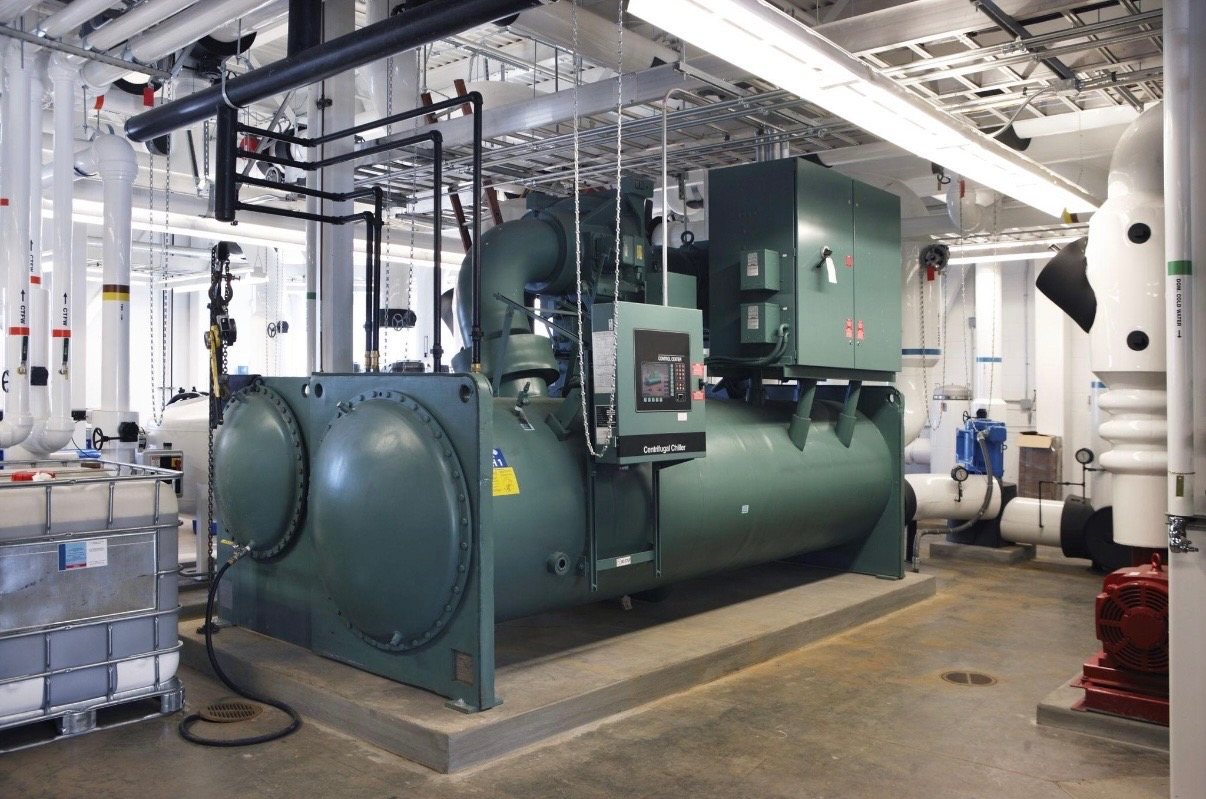
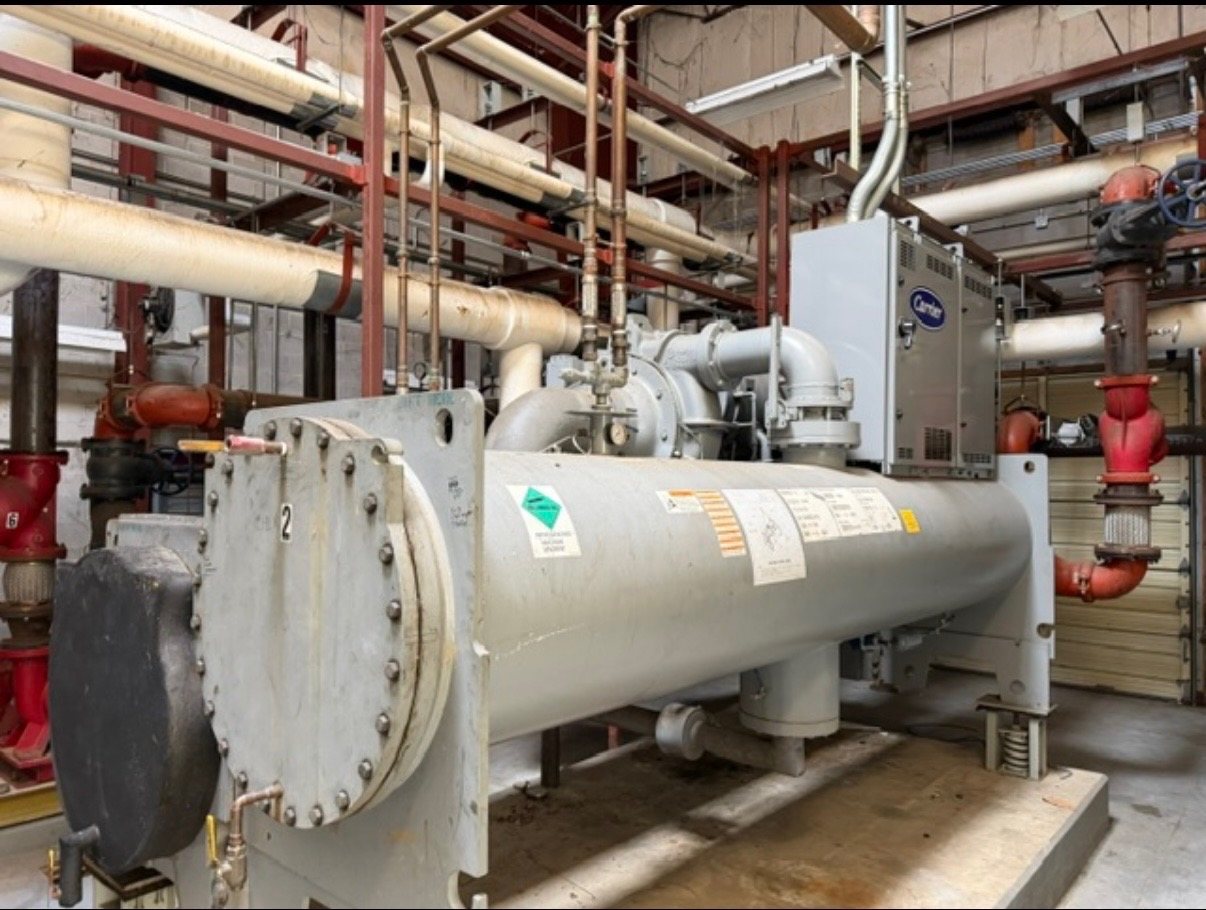
What to know about York chillers
A York chiller offer depends on the actual machine, included accessories and access. A label on a building control system is not necessarily the label for the chiller itself. Identify the equipment being offered and distinguish it from other York-branded components at the site.
A cash offer should identify the specific branded chiller, included components and removal conditions. A clear scope is more useful than an unsupported valuation based on brand alone. We discuss the offer after reviewing the actual model, condition, pickup and access information.
Plan the pickup at your Ohio site
Ohio pickup planning starts at the exact equipment location, not just the mailing address. Show the machine in its room or on its pad, the intended exit, the route to a truck and any locked gates. Tell us who can approve access and whether nearby equipment needs to stay in service. A roof, basement and outdoor yard each present different handling questions.
Tell us about known site restrictions before scheduling. A site contact can explain what is accessible, but the removal team must evaluate the actual route, load and work area.
Reconcile original and later labels
Send the machine model, serial number, tonnage and refrigerant from its own label, and photograph any matching external starter if it is included.
An old equipment schedule, an original nameplate and a later service tag may not all describe the same configuration. Photograph the unit label and any retrofit or conversion markings without removing covers. Supply the model, serial, capacity, voltage and stated refrigerant. If the documents disagree, share the conflict instead of choosing the answer that sounds most likely; the buyer can follow up on the actual equipment.
Condition is information, not a testing requirement
Describe visible damage, missing components and the approximate last operating status if known. Unavailable history is acceptable and should be stated plainly.
A machine described as spare may be disconnected, or it may still be connected and held for backup. Clarify its current release status and when the site can make it available; do not start it just to establish its value.
We consider used, surplus and non-running chillers, including equipment of unknown operating condition. There is no need to restore power, repair a fault or perform a performance test to ask for a cash offer. Accurate disclosure and a possible site access review are different from requiring the machine to operate.
Plan for water or process-fluid connections
The chiller may have water or process-fluid piping in addition to its refrigerant circuit. Tell the buyer which connections are still attached, whether fluid condition is known and what nearby equipment has to stay. The buyer coordinates and pays for agreed disconnects and refrigerant recovery. The site should identify the system boundaries; personnel doing the work determine the appropriate isolation and handling steps.
Plan for basement or interior equipment
Show the space between vessel ends, walls and other equipment, as well as the removal doorway, so the lifting approach is not based on an assumption.
An interior machine may have to pass through a service corridor, opening, ramp or other constrained route. Photograph each transition and describe any surfaces or adjacent machinery that need protection. The buyer coordinates and pays for agreed rigging, crane work if needed, loading and freight. Qualified personnel determine whether a route is viable and whether any separation is appropriate for that specific machine.
Resolve uncertainty before pickup
An initial inquiry can start with imperfect information, but material uncertainty about ownership, equipment scope or access should be addressed in the agreed plan. Share conflicting records or missing details openly. We make a cash offer and pay upfront before pickup once an offer is accepted. Confirm the payment method, equipment and buyer-paid disconnect, recovery, rigging and transport scope in writing.
For a closure, identify a primary contact who can provide access and answer questions after operations stop. Ask whether there are other contractors working in the same space or using the same loading area.
What to send for a useful first conversation
Start with an asset list: manufacturer, model, serial, rated capacity, refrigerant and the location of each machine. Identify which units are surplus and whether they are still connected. Add photographs showing the room, pad or roof and the route toward a loading area. If the records are incomplete, mark unknown items rather than guessing or starting the machine.
For a chiller labeled York to sell in Ohio, include the location and a contact who can confirm the asset and arrange site access. If a detail is unavailable, say so instead of taking an unsafe photograph or guessing at the specifications.
Does cooling tonnage equal equipment weight?
No. Cooling tons measure capacity, not the weight of the assembly. We consider all tonnages, including 20 to 2,000+ tons. A removal crew needs the actual dimensions and verified weight, not an estimate based on the capacity label.